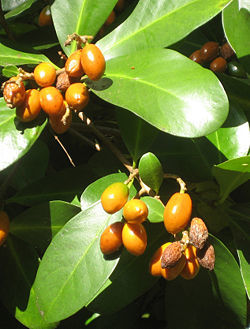
Karaka
Plant · Corynocarpaceae
Karaka produces a severe convulsive picture with tetanic rigidity of the limbs, potentially leading to permanent distortion if the limbs are not properly positioned during the crisis. It is indicated in violent convulsions with extreme rigidity, flushings of heat, protrusion of eyes and tongue, and grinding of teeth, resembling the picture of strychnine poisoning.
Key symptoms
- Violent spasms and convulsions of the whole body
- Arms and legs stretched violently and rigidly outward
- Great flushings of heat during convulsions
- Protrusion of eyes and tongue with gnashing of jaws
- Permanent rigid distortion of limbs if not properly secured during crisis
- Giddiness
- Spasmodic pains and partial paralysis

Corynocarpus lævigatus. Kopi Tree (New Zealand). N. O. Myrsinaceæ (Allen puts it in Anacardiaceæ). Tincture or Trituration of fresh seeds.
Clinical
Paralysis.
Characteristics
G. Bennett has recorded a few symptoms observed in the case of a Maori chief poisoned with the seeds of Karaka, which contain a tasteless farinaceous substance and are eaten in times of scarcity. But the raw seeds are poisonous and produce spasmodic pains, giddiness, and partial paralysis. To obviate this they are steamed for twenty-four hours, and then either buried in the ground or allowed to soak in water for some days (Treas. of Bot.). C. F. Fischer (H. W., xxviii. 515) proved Karaka and used it clinically in cases of convulsions. He quotes an account of its effect from the Proceedings of the New Zealand Institute:─Violent spasms and convulsions of whole body, arms and legs stretched violently and rigidly out; great flushings of heat; protrusion of eyes and tongue; gnashing of jaws. The poison proves rapidly fatal if the …
Classical texts are in the public domain. Educational reference only — not medical advice.
