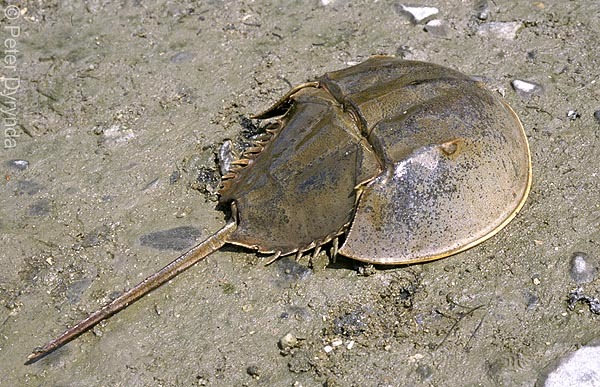
Limulus cyclops
Limulus polyphemus (horseshoe crab) blood · Animal
Limulus Cyclops presents with right-sided fullness and pain, mental depression, and exhaustion especially after sea bathing. The blood of this crustacean contains copper, linking it to copper-related remedy states. Gastro-enteric and respiratory symptoms are aggravated by drinking water.
Key symptoms
- Bodily and mental exhaustion with drowsiness after sea bathing
- Painful fullness of whole right side of body
- Mental depression with difficulty remembering names and confused thoughts
- Heat of face with rush of blood worse when meditating
- Fluent coryza with sneezing worse from drinking water
- Colic with heat; abdomen hot and constricted; piles with constriction of anus
- Dyspnoea after drinking water
- Itching spots and vesicles on face and hands with burning in palms
- Pain in right hip-joint; soles of feet ache and feel numb
Worse (aggravation)
- Drinking water (sneezing worse, dyspnoea after drinking)
- Meditating (mental confusion and rush of blood to face worse)
Better (amelioration)
- After nasal discharge (head pressure better)

Horse-foot-King-crab (LIMULUS - XIPHOSURA)
Limulus was introduced by C. Hering and partially proved by him and Lippe. Hering was surprised to see the blood of the King-crab that he dissected, blue, which on investigation, was found to contain copper as he had surmised and which he thought would prove to be another medicine for Cholera. Further provings are necessary to establish this, though symptoms so far observed make this probable. Hering's fertile mind always lead him to pioneer paths into practical therapeutics.
Bodily and mental exhaustion; drowsiness after sea bathing. Gastro-enteric symptoms. Painful fullness of whole right side of body.
Head
Mental depression. Difficult to remember names, confused with heat of face, rush of blood to face, worse when meditating. Pain behind left eye-ball.
Nose
Fluent coryza. Sneezing worse drinking water. Constant nasal dropping. Pressure above nose and behind eyes.
Abdomen
Colic with heat. Cramp-like pain with watery stools. Abdomen hot and constricted. Piles, constriction of anus.
Respiratory
Husky voice. Dyspnœa after drinking water. Oppression of chest.
Extremities
Crural neuralgia. Soles of feet ache, feel numb. Pain in right hip-joint. Heels sore.
Skin
Itching spots and vesicles on face and hands. Burning in palms.
Relationship
Compare: Asterias; Homarus; Cuprum.
Dose
Sixth potency.

Limulus cyclops. L. polyphemus. Polyphemus occidentalis. King-crab. Horse-foot. Sauce-pan. (Coast of North America). N. O. Merostomata, or Pœcilopoda of the Crustacea. Triturations of the dried blood.
Clinical
Apoplexy. Cholera. Constipation. Diarrhœa. Fever. Hæmorrhoids. Sea-bathing, effects of. Skin, affection of.
Characteristics
Limulus was proved in the lower triturations by Hering, Lippe, and others. Among the symptoms recorded the most notable was a rush of blood to the face, with heat of face and over whole body, recalling a similar symptom of Ast. r., another sea-animal. The remedy does not appear to have been much used, and Hering has omitted it from his Guiding Symptoms. The only italicised symptoms in Allen are these: "Frequent rush of blood to the face, and painful fulness of the whole right half of the body, especially here and there, and in the lower extremities" (a symptom of Hering's from the first centesimal trituration); and "heat, burning, and constriction in abdomen" (Blumenthal, a …
Classical texts are in the public domain. Educational reference only — not medical advice.
