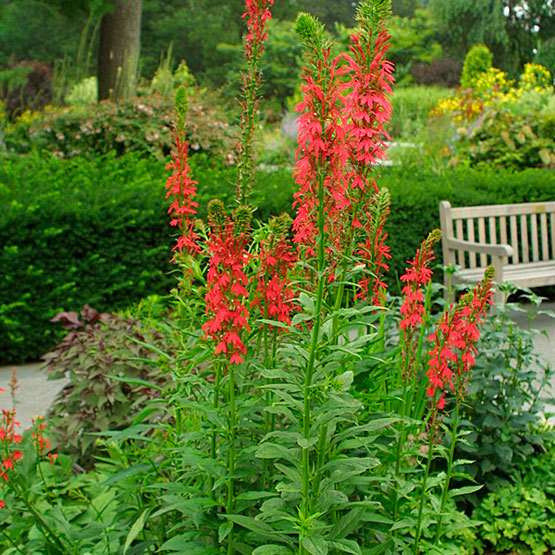
Lobelia cardinalis
Plant · Campanulaceae
Lobelia cardinalis suits individuals with marked burning and pricking sensations in the mouth, throat, and left chest, combined with oppression of breathing and occipital headache. The remedy is indicated in debilitated states with prolonged loss of appetite and hypersensitivity to acrid stimuli.
Key symptoms
- Burning in mouth and throat lasting many hours better by copious cold water
- Headache dull and distressing at base of occiput worse by motion or shaking head
- Throbbing and weakness in lower limbs with headache compelling lying down
- Oppressed breathing with sticking pains on taking a deep breath
- Tongue raw, sore, very red especially at tip with a blister
- Sticking pain in left hypochondrium coming suddenly and violently
- General debility lasting two weeks; appetite absent for three weeks after one dose
Worse (aggravation)
- Motion; shaking head (headache)
- 8 a.m. (multiple symptoms)
Better (amelioration)
- Copious cold water (burning in tongue and fauces)
- Pressing with hand (stitch in left chest)

Lobelia cardinalis. Cardinal Flower. N. O. Lobeliaceæ. Tincture of fresh plant.
Clinical
Anorexia. Debility. Headache. Sore throat.
Characteristics
There is a proving of Lob. card. by S. D. R. Dubs, who took ten drops of the tincture in one dose. Dubs' symptoms have been confirmed by a second proving by Kopp (H. W., xxxi. 26). The acrid properties of the plant were immediately felt by Dubs, in burning in mouth and throat, which lasted a long time. Sticking and pricking sensation in various parts, especially left chest and left hypochondrium. Oppression of breathing. Headache at base of occiput < by motion and shaking head; stiffness in nape. Throbbing and weakness in lower limbs. Most of the effects lasted two weeks, and it was three weeks before the appetite returned. There was thirst for cold water, which > burning in tongue and fauces. Many symptoms occurred at 8 a.m. Sleepy but difficulty in sleeping. A lady to whom Cooper gave one dose of Lob. cd. had "flashes of light before eyes every day for a …
Classical texts are in the public domain. Educational reference only — not medical advice.
