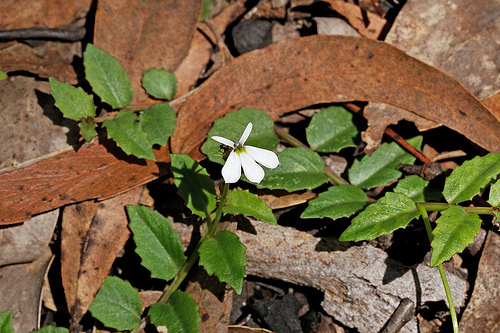
Lobelia purpurascens
Plant · Campanulaceae
Lobelia purpurascens suits patients who are deficient in silica — nervous, liable to boils, of hasty disposition, perspiring profusely, and whose teeth decay early. It is indicated in low typhoid conditions and influenza with profound nervous and vital prostration, and in states resembling snake poisoning with rapid onset of symptoms within five minutes.
Key symptoms
- Profound prostration of vital and nervous forces; intense exhaustion
- Respiratory paralysis with superficial breathing almost ceasing
- Overwhelming drowsiness and sickening dizzy headache especially between eyebrows
- Tongue white and paralysed; thick saliva in mouth
- Deadly chill without shivering but overpowering the entire system
- Tightness of chest with great oppression and laboured breathing
- Heart nearly paralysed; beat almost imperceptible
- Great weakness of lower extremities; knees collapse under body weight
Worse (aggravation)
- Movement
- Damp weather
- Shaking head or any motion

Purple Lobelia
Profound prostration of all the vital forces and of the nervous system; respiratory paralysis. Nervous prostration of influenza. Coma. Tongue white and paralyzed.
Head
Confused and depressed. Headache with nausea, vertigo; especially between eyebrows. Cannot keep eyes open; spasmodic closure of lids.
Chest
Superficial respiration; heart and lungs feel paralyzed; respiration slow. Heart beats sound to him like boom of a drum.
Eyes
Impossible to keep open. Drowsy.
Relationship
Compare: Baptisa; Lobelia cardinalis (debility, especially of lower extremities; oppressed breathing, pleurisy, sticking pain in chest on taking a long breath. Pain in left lung, intermitting pricking during the day).
Dose
Third potency.

Lobelia purpurascens. N. O. Lobeliaceæ. Tincture of whole fresh plant.
Clinical
Heart, paralysis of. Influenza; headache of. Lichen tropicus. Lungs, paralysis of. Snake-bites. Tongue, paralysis of. Typhoid fever. Vertigo.
Characteristics
The first mention of this plant was made by Erskine C. White (H. W., xxxii. 502) under the name Lobelia rubra, corrected later by F. Kopp (H. W., xxxiii. 328) and E. C. White himself (H. W., xxxiii. 510) to Lob. purpurascens. Kopp describes the plant thus: "Stems angular, procumbent. Leaves ovate, green on surface, and either purple or purple and green underneath, somewhat serrulated, rather firm, usually from half to one inch long; pedicles axillary, much shorter than the leaves, reflexed after flowering. Flowers white above, purpled beneath, delicately scented, most diœcious, corolla four or five lines long, the lower lobes oblong, obtuse, the two upper ones shorter and narrower, more acute and incurved. Capsule narrower, ovoid, fully three lines long; seeds rather …
Classical texts are in the public domain. Educational reference only — not medical advice.
