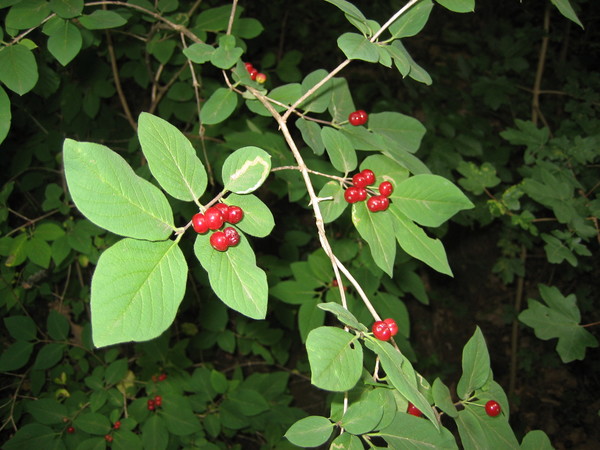
Lonicera xylosteum
Plant · Caprifoliaceae
Lonicera xylosteum is suited to persons in convulsive and comatose states following toxic insults, with the peculiar hallmark of unequal pupils. It may be indicated in uraemic convulsions, albuminuria, and advanced syphilitic states with serious neurological involvement.
Key symptoms
- Violent convulsions with trembling and jerking of the whole body
- Coma vigil; stupefaction; unable to hear, see, or answer
- One pupil contracted, the other dilated
- Abdomen retracted especially in umbilical region
- Limbs and head fall over as if paralysed when raised from bed
- Profuse vomiting and purging after ingestion of berries
- Slow, small, irregular pulse

Fly-woodbine
Convulsive symptoms. Uræmic convulsions. Albuminuria. Syphilis.
Head
Congestion of head and chest; coma. Contraction of one pupil and dilatation of the other. Sopor, eyes half open red face.
Extremities
Jerking of limbs. Trembling of whole body. Violent convulsions. Limbs and head fall over as if paralyzed. Extremities cold. Cold perspiration.
Relationship
Compare: Lonicera pericylmenum-Honeysuckle --(irritability of temper, with violent outburst (Crocus)).
Dose
Third to sixth potency.

Lonicera xylosteum. Fly Woodbine. N. O. Caprifoliaceæ. Trituration or tincture of berries.
Clinical
Coma vigil. Convulsions.
Characteristics
Lon. xylost. is known from the effect of poisoning by its berries. Vomiting and purging; trembling and jerking of the limbs, convulsions and coma were the chief symptoms. Peculiar symptoms were: Contraction of one pupil and dilatation of the other. Abdomen retracted especially in umbilical region. Slow pulse.
Relations
Compare: Dig. (slow pulse). Cad. s. and Rhod. (one pupil contracted, the other dilated). For botan. relations see Lon. peri.
1. Mind
Stupefaction.─Coma.
2. Head
Great congestion of head and chest.
Classical texts are in the public domain. Educational reference only — not medical advice.
