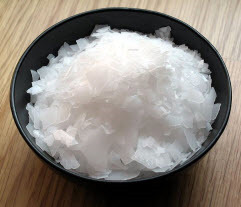
Magnesium muriaticum
Magnesium chloride · Magnesium chloride. · Mineral
Mag. mur. is most suitable for people who feel deep distress on witnessing arguments and crave peace and harmony. Reserved, sad, and self pitying, they often show a long-suffering face to the world. Nervous oversensitivity is typical, with restlessness in bed: they find it hard to sleep well, waking unrefreshed and needing a long time to recover each morning. The liver, nerves, uterus, and rectum are often greatly affected. Conditions treated are usually chronic, involving great weakness, swollen glands, and a susceptibility to colds. Chronic fatigue syndrome, for example, may be helped by the remedy. Digestive complaints such nausea, indigestion, and constipation are all strongly associated with the remedy if they are accompanied by the characteristic nervous state of mind. Children who are prone to digestive problems and whose parents regularly argue, for instance, may benefit from Mag. mur.
Key symptoms
- Chronic liver affections with enlarged liver and bloated abdomen
- Pressing pain in liver worse lying on right side
- Cannot digest milk; constipation with hard, knotty stools like sheep dung
- Loss of smell and taste following catarrh; nostrils ulcerated
- Bursting headache worse motion and open air; better pressure and warmth
- Urine difficult to void; must strain abdominal muscles
- Eructations like rotten eggs; rising of white froth into mouth
- Blisters on lips; gums swollen and bleed easily
Worse (aggravation)
Better (amelioration)

Muriate of Magnesia (MAGNESIA MURIATICA)
A liver remedy with pronounced characteristic constipation. Chronic liver affections with tenderness and pain, extending to spine and epigastrium, worse after food. Especially adapted to diseases of women, with a long history of indigestion and uterine disease; children who cannot digest milk. Evil effects of sea bathing.
Head
Sensitive to noise; bursting headache; worse, motion, open air; better, pressure, and wrapping up warmly (Sil; Stront). Much sweating of head (Calc, Sil). Facial neuralgia pains, dull, aching, worse damp weather, slightest draft, better pressure heat.
Nose
Nostrils ulcerated, Coryza. Nose stopped and fluent. Loss of smell and taste, following catarrh. Cannot lie down. Must breathe through mouth.
Mouth
Blisters on lips. Gums swollen, bleed easily. Tongue feels burnt and scalded. Throat dry, with hoarseness.
Stomach
Appetite poor, had taste in mouth. Eructations like rotten eggs. Continued rising of while froth into mouth Cannot digest milk. Urine can be passed only by pressing abdominal muscles.
Abdomen
Pressing pain in liver; worse lying on right side. Liver enlarged with bloating of abdomen; yellow tongue. Congenital scrotal hernia. Must use abdominal muscles to enable him to urinate.
Urine
Urine difficult to void. Bladder can only be emptied by straining and pressure.
Bowels
Constipation of infants during dentition; only passing small quantity; stools knotty, like sheep's dung, crumbling at verge of anus. Painful smarting hæmorrhoids.
Female
Menses black, clotted. Pain in back and thighs. Metrorrhagia; worse at night. Great excitement at every period. Leucorrhœa with every stool and after exercise. Tinea ciliaris, eruptions in face and forehead worse before menses.
Heart
Palpitation and cardiac pain while sitting; better by moving about (Gels). Functional cardiac affections with liver enlargement.
Respiration
Spasmodic dry cough; worse forepart of night, with burning and sore chest.
Extremities
Pain in back and hips; in arms and legs. Arms "Go to sleep" when waking in morning.
Sleep
Sleep during day; restless at night on account of heat and shock: anxious dreams.
Modalities
Worse, immediately after eating, lying on right side: from sea bathing. Better, from pressure, motion: open air, except headache.
Relationship
Antidotes: Camph; Cham.
Compare: Nat m; Puls; Sep; Amm m; Nasturtium equaticum -Water-cress--(useful in scorbutic affections and constipation, related to strictures of urinary apparatus; supposed to be aphrodisiacal in its action. Is also antidotal to tobacco narcosis and sedative in neurotic affections, neurasthenia, hysteria. Cirrhosis of liver and dropsy).
Dose
5 drops of tincture. Third to 200th potency.
It would seem rather strange that the two remedies to which Hahnemann gave such a good start by proving and use should be so neglected and forgotten as Magnesia carb. and Magnesia mur. have been.
These two, if used, would cure many of the liver troubles that are not now cured. Magnesia mur. could cure many conditions in nervous, excitable women that now go uncured. These remedies are neglected, while Phosphorus and Sulphur are prescribed for almost everything.
Magnesia mur. is a deep-acting antipsoric suited to nervous patients with stomach and liver troubles. it has enlarged glands and irritation of the nerve centres and brain. This patient is often sensitive to cold, chilly, but be desires fresh air and open air.

Chloride of magnesium. Magnesia chloride. Mg Cl2. Solution. Trituration.
Clinical
Biliousness. Bladder, paresis of. Cardialgia. Cold. Constipation. Deafness. Diarrhœa. Dysmenorrhœa. Dyspepsia. Foot-sweat. Headache. Heart, affections of. Hæmorrhoids. Heartburn. Home-sickness. Hysteria. Leucorrhœa. Liver, affections of. Menstruation, painful. Nocturnal emissions. Ozæna. Palpitation. Pregnancy, nausea of. Smell, disordered. Spleen, enlarged. Stomach, disorders of. Taste, disordered. Tinea ciliaris. Urine, straining to pass. Uterus, pain in; induration of. Waterbrash. Whooping-cough.
Characteristics
Whilst Mag. c. and Mag. sul. are recognised old-school remedies, I can find no mention of Mag. mur. or Mag. Phos. in modern text-books. Mag. m. first appeared in Hahnemann's Chronic Diseases. The general feature of Mag. c. appears in many symptoms, notably those of nervous disturbance and hysteria. The salt, says Guernsey, "is found in many mineral waters, and in seawater. It has a very bitter …
Chloride of Magnesia (MgCl)
Especially adapted to diseases of women; spasmodic and hysterical complaints, complicated with uterine diseases; who have suffered for years from attacks of indigestion or biliousness. Children: during difficult dentition are unable to digest milk; it causes pain in stomach and passes undigested; puny, rachitic, who crave sweets. Great sensitiveness to noise (Ign., Nux, Ther.). Headache: every six weeks, in forehead and around the eyes; as if it would burst; < from motion and in open air; > from lying down, strong pressure (Puls.), and wrapping up warmly (Sil., Stron.). Great tendency of head to sweat (Cal., Sanic., Sil.). Continual raising of white froth in mouth. Eructations, tasting like rotten eggs, like onions (breath smells of onions, Sinap.). Toothache; unbearable when food touches the teeth. Pressing pain in liver, when walking and touching it, liver hard, enlarged, < lying on right side (Mer., Kali c.). Constipation: stool hard, scanty, large, knotty, like sheep's dung; …
Anus and Stool
Hard, knotty, difficult stools, crumbling as they pass the verge of the anus.
Urinary Organs
Urine can only be passed by bearing down with the abdominal muscles.
Heart and Pulse
Palpitation of the heart, < when quiet or sitting; > when moving about.
-
Constipation; stools hard and knotty like sheep's dung, or crumbling as if burnt, especially in puny, rachitic children, with enlarged abdomen, or in infants during. dentition.
-
Indigestion of children during dentition; milk causes pain in stomach and passes undigested.

Phatak's chapter on Magnesium muriaticum is available in the app.
Read Phatak in the appClassical texts are in the public domain. Educational reference only — not medical advice.
