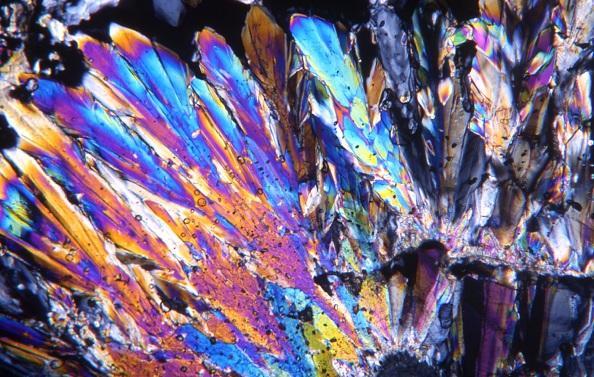
Magnesium phosphoricum
Magnesium phosphate · Magnesium phosphate, phosphate of magnesia. · Mineral
Mag. phos. is considered most suitable for outgoing people who are prone to impulsive and restless behavior. Often sensitive, artistic, intellectual individuals, they also have a tendency to be forgetful and unable to concentrate. In addition, they may be prone to irritability, nervousness, and exhaustion. These people fear the dark, thunderstorms, and confrontation with others.
A hypochondriac streak is a common trait in these people, marked by sensitivity to the cold and regular complaints of muscle cramps. Symptoms are generally worse on the right side. There may be craving for sugar and an aversion to coffee.
Mag. phos. is usually taken for menstrual or neuralgic pains, headaches, sharp abdominal pain, toothaches, and earaches.
Key symptoms
- cramping pain
- sensitive, artistic, intellectual temperament
- complaints that tend to affect the right side of the body
- person feels better for warmth
Worse (aggravation)
- Cold air and cold water
- Touch
- Right side
- Mental exertion
- Night
- Uncovering
Better (amelioration)
- Warmth and warm applications
- Heat in any form
- Pressure and rubbing
- Hot liquids
- Bending double
- Walking in open air

Phosphate of Magnesia (MAGNESIA PHOSPHORICA)
The great anti-spasmodic remedy. Cramping of muscles with radiating pains. Neuralgic pains relieved by warmth. Especially suited to tired, languid, exhausted subjects. Indisposition for mental exertion. Goitre.
Mind
Laments all the time about the pain. Inability to think clearly. Sleepless on account of indigestion.
Head
Vertigo on moving, falls forward on closing eyes, better walking in open air. Aches after mental labor, with chilliness; always better warmth (Sil). Sensation as if contents were liquid, as if parts of brain were changing places, as of a cap on head.
Eyes
Supraorbital pains; worse, right side; relieved by warmth applied externally. Increased lachrymation. Twitching of lids. Nystagmus strabismus, ptosis. Eyes hot, tired, vision blurred, colored lights before eyes.
Ears
Severe neuralgic pain; worse behind right ear; worse, by going into cold air, and washing face and neck with cold water.
Mouth
Toothache; better by heat and hot liquids. Ulceration of teeth, with swelling of glands of face, throat and neck and swelling of tongue. Complaints of teething children. Spasms without febrile symptoms.
Throat
Soreness and stiffness, especially right side; parts seem puffy, with chilliness, and aching all over.
Stomach
Hiccough, with retching day and night. Thirst for very cold drinks.
Abdomen
Enteralgia, relieved by pressure. Flatulent colic, forcing patient to bend double; relieved by rubbing, warmth, pressure; accompanied with belching of gas, which gives no relief. Bloated, full sensation in abdomen; must loosen clothing, walk about and constantly pass flatus. Constipation in rheumatic subjects due to flatulence and indigestion.
Female
Menstrual colic. Membranous dysmenorrhœa. Menses too early, dark, stringy. Swelling of external parts. Ovarian neuralgia. Vaginismus.
Respiratory
Asthmatic oppression of chest. Dry, tickling cough. Spasmodic cough, with difficulty in lying down. Whooping-cough (Corall). Voice hoarse, larynx sore and raw. Intercostal neuralgia.
Heart
Angina pectoris. Nervous spasmodic palpitation. Constricting pains around heart.
Fever
Chilliness after dinner, in evening. Chills run up and down the back, with shivering, followed by a suffocating sensation.
Extremities
Involuntary shaking of hands. Paralysis agitans. Cramps in calves. Sciatica; feet very tender. Darting pains. Twitchings. Chorea. Writers' and players' cramp. Tetanic spasms. Weakness in arms and hands, finger-tips stiff and numb. General muscular weakness.
Modalities
Worse, right side, cold, touch, night. Better, warmth, bending double, pressure, friction.
Relationship
Compare: Kali phos; Colocy; Silica; Zinc; Diosc.
Antidotes: Bell; Gels; Lach.
Dose
First to twelfth potency. Sometimes the highest potencies are preferable. Acts especially well, given in hot water.
Magnesia phos. is best known for its spasmodic conditions and neuralgias.
The pains
are very violent and may affect any nerve. A pain localizes itself in a nerve and becomes worse and worse, sometimes coming in paroxysms, but becoming so violent that the patient becomes frantic.
The pains are ameliorated by heat and pressure. The patient feels better in a warm place; and his neuralgias are also better, he is miserable, and his pains are brought on when he becomes cold or is in a cold place. Pains are brought on from riding in the cold, and in cold, damp weather. Exposure for a long time to cold winds causes neuralgia of the face,
The pains are felt everywhere. Pain in the bowels, enteralgias, cramps in the stomach and bowels, with the same modalities. Pains in the spinal cord under the same rule - amelioration from heat. There are times when a nerve, in which there is considerable pain, becomes sensitive to pressure, becomes sore. The spinal cord becomes sore.

Phosphate of Magnesia, Hydric magnesia phosphate. (MgHPO47H2O.) Trituration.
Clinical
Catheterism. Chorea. Colic. Convulsions. Cough. Cracks. Cramps. Dentition. Dysmenorrhœa. Headache. Intercostal neuralgia. Locomotor ataxy. Membranous dysmenorrhœa. Meningitis. Menstruation, painful. Neuralgia. Rectum, prolapse of. School-headache. Sciatica. Stomach, cancer of. Sobbing, spasmodic. Tic-douloureux. Toothache. Vaginismus. Whooping-cough. Writer's cramp.
Characteristics
Mag. Phos. is one of the most important of Schüssler's original additions to the materia medica. It has had a very fine proving in the potencies, conducted by H. C. Allen (Med. Adv., xxxiii. 386-415), but I will first give Schüssler's own account: Phosphate of Magnesia is contained in─blood-corpuscles, muscles, brain, spinal marrow, nerves, teeth. Disturbance of its molecules results in─pains, cramps, paralysis. The pains are─shooting like lightning, or boring; often combined with or alternating with a sensation of constriction; at times …
Phosphate of Magnesia.
Is best adapted to thin, emaciated persons of a highly nervous organization; dark complexion. Affections of right side of body; head, ear, face, chest, ovary, sciatic nerve (Bell., Bry., Chel., Kali c., Lyc., Pod.). Pains: sharp, cutting, stabbing; shooting, stitching; lightning-like in coming and going (Bell.); intermittent, paroxysym becoming almost unberable, driving patient to frenzy; rapidly changing place (Lac c., Puls.), with a constricting sensation (Cac., Iod., Sulph.); cramping, in neuralgic affections of stomach, abdomen and pelvis (Caul., Col.). Great dread: of cold air; of uncovering; of touching affected part; of cold bathing or washing; of moving. Languid, tired, exhausted; unable to sit up. Complaints from standing in cold water or working in cold clay (Cal.). Ailments of teething children; spasms during dentition, no fever (with fever, hot head and skin, Bell.). Headache: begins in occiput and extends over head (Sang., Sil.); of school girls; face red, flushed; …
Stomach
Spasmodic hiccough day and night, with retching.
Abdomen
Flatulent colic forcing the patient to bend double > from heat, rubbing; spasmodic pains generally
Generalities
Severe cramping pains, especially in stomach, abdomen and pelvis, > by hot applications.
Generalities
Pains lightning-like coming and going.
Causes and Modalities
Pains relieved by hot applications.

Phatak's chapter on Magnesium phosphoricum is available in the app.
Read Phatak in the app
Tissue salts's chapter on Magnesium phosphoricum is available in the app.
Read Tissue salts in the appClassical texts are in the public domain. Educational reference only — not medical advice.
