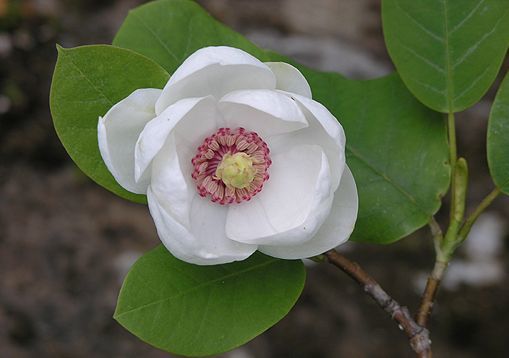
Magnolia glauca
Magnolia virginiana · Plant · Magnoliaceae
Magnolia glauca is indicated in individuals with oppression of the chest, inability to expand the lungs, and strong fainting tendency associated with gastric discomfort. It may also be considered in inflammatory gout with periodic afternoon exacerbations.
Key symptoms
- Great oppression about the chest with strong tendency to fainting
- Oppression of chest unable to expand the lungs with feeling of undigested food distressing the stomach
- Increased pain of inflammatory gout after exposure to the flowers
- Paroxysm of afternoon pain increased by the flowers
Worse (aggravation)
- Exposure to the flowers of Magnolia glauca (chest oppression, gout pain, afternoon paroxysms)

Sweet Magnolia. Sweet Bay. N. O. Magnoliaceæ. Tincture of the flowers.
Clinical
Asthma. Fainting.
Characteristics
Our knowledge of Mag. gl. is based on two observations by S. A. Jones and T. F. Allen of the effects of the flowers on three persons. The symptoms were these: "Sense of great oppression about his chest;" "strong tendency to fainting (these occurred in a man). A lady had: "Oppression of chest; could not expand the lungs; with a feeling as if she had swallowed food without chewing, and it distressed her stomach." In a doctor it "increased the pain of inflammatory gout;" and "evidently increased the paroxysm of a pain which came on every afternoon." The Treasury of Botany says: "M. glauca is a low-growing, deciduous tree, called in America Swamp Sassafras, from the nature of the locality in which it grows, and from the resemblance in its properties to Laurus sassafras. It is also called Beaver-tree, because the root is eaten by beavers, which animals also make use of the wood in constructing their nests."
Classical texts are in the public domain. Educational reference only — not medical advice.
