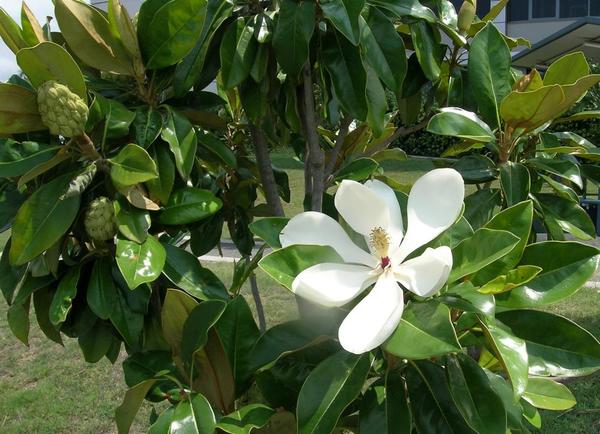
Magnolia grandiflora
Plant · Magnoliaceae
The Magnolia patient tends to be tired and stiff with a general sense of soreness. They are prone to rheumatic conditions alongside cardiac symptoms, with pains that shift erratically. This remedy suits individuals who experience alternating complaints between different organ systems.
Key symptoms
- Rheumatic and cardiac lesions as prominent features
- Alternating pains between spleen and heart
- Patient tired and stiff, soreness when quiet
- Erratic shifting of pains
- Oppression of chest with inability to expand lungs
- Sensation as if heart had stopped beating
- Suffocated feeling when walking fast or lying on left side
- Stiffness and sharp erratic pains worse in joints
- Pains around heart accompanied by itching of the feet
Worse (aggravation)
- Damp air
- Lying on left side
- In morning on first rising
Better (amelioration)
- Dry weather
- Motion
- Intermenstrual flow

Magnolia
Rheumatism and cardiac lesions are prominent features in toe symptomatology of this drug. Stiffness and soreness. Alternating pains between spleen and heart. Patient tired and stiff. Soreness when quiet. Erratic shifting of pains.
Heart
Oppression of chest with inability to expand the lungs. Feeling of a large bolus of food which distressed the stomach. Suffocated feeling when walking fast or lying on left side. Dyspnœa. Crampy pain in heart. Angina pectoris. Endocarditis and pericarditis. Tendency to faint. Sensation as if heart had stopped beating. Pains around heart accompanied by itching of the feet.
Extremities
Stiffness and sharp erratic pains; worse in joints. Feet itch. Numbness in left arm. Rheumatic pain in clavicles. Shooting in all limbs.
Modalities
Worse, damp air, lying on left side; in morning on first rising. Better, dry weather, motion; intermenstrual flow (Ham; Bovista; Bell; Elaps).
Relationship
Compare: Rhus; Dulcam; Aurum
Dose
Third potency.

Magnolia grandiflora. Yolotxochitl. (Mexico.) N. O. Magnoliaceæ. Tincture of the flowers.
Clinical
Aneurism. Angina pectoris. Heart, affections of. Inter-menstrual flow. Rheumatism. Vertigo.
Characteristics
In his Handbook Allen gives a full pathogenesis of Mgl. grand. It produces bruised and constrictive and rheumatic pains in various parts, and particularly the joints. Pains rapidly change their place or alternate. Alternating pains between spleen and heart. The rheumatic action of the drug is particularly manifested in the chest and heart. A marked action was developed in the female sexual sphere, and an inter-menstrual flow was observed. Allen gives as indications for it: Rheumatic pain in clavicles. Crampy pain in heart, alternating with lancinations. Pain in heart with suffocative constriction of throat. Aortic aneurism, crampy pain in heart, dry cough, nausea, with vertigo and angina pectoris. Rheumatic pains in back, especially when alternating with similar pains in different parts. Muscular rheumatism of left arm.
Classical texts are in the public domain. Educational reference only — not medical advice.
