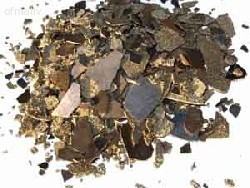
Manganum
Manganese · Manganese. · Mineral
Manganum met. is most appropriate for those who are open, friendly, and helpful. They are orderly and conscientious and, if unable to be of help to others, tend to feel restless, lost, and irritable.
The remedy is most commonly given when the bones are extremely sensitive, especially in children who have been experiencing rapid growth. Symptoms are usually better for lying down. Manganum met. is also prescribed for ear conditions such as earaches, temporarily reduced hearing, tinnitus, and great sensitivity to noise and wind. Earaches seem to begin elsewhere in the body and travel to the ear.
Key symptoms
- Bones very sensitive to touch; red elevated spots on skin over affected bones
- Ankles particularly affected; children unable to walk
- Hoarse voice; drawing sensation of muscles
- Cough better lying down; worse in damp weather
- Parotid gland swollen in typhus with sensitive bones
- Affections of the internal ear; deafness
- Anaemia with marked action on blood-forming process
Worse (aggravation)
Better (amelioration)

General features
: Manganum is pre-eminently a drug that causes a species of chlorosis, and it is suitable for chlorotic girls, in broken down constitutions, waxy, anaemic, pallid, sickly, threatening phthisis, with necrosis and caries of bone and organic affections.
There is the history of a long period of scanty menstruation, or the menses have been delayed until the patient was eighteen or twenty years of age.
A strong feature is the great soreness of the periosteum, and especially of the shin bone. Tendency to ulceration and eruptions, and around these there is thickening and infiltration. Chronic eruptions; inveterate like psoriasis.
Small ulcers suppurate and infiltrate with purple hardness. It has a deep action, breaks down the blood corpuscles and lays the foundation for tuberculosis, especially in the larynx. Repeated attacks of laryngitis, each leaving the patient in a worse state than before. Tuberculosis that begins in the larynx. Aversion to food, no appetite, nothing will tempt him.

MANGANUM ACETICUM. Acetate of Manganese. Manganous Acetate. Mn(C2H3O2)2 4H2O. Solution.
Clinical
Anæmia. Ankles, weak. Asthenopia. Asthma. Bones, pains in. Brain, concussion of. Climacteric flushings. Cough. Deafness, catarrhal. Dysmenorrhœa. Ears, affection of. Gall-stones. Gout. Headache. Heel, rheumatism of. Hoarseness. Itch. Jaundice. Laryngeal phthisis. Laryngitis. Lichen. Myopia. Palate, affections of. Paraplegia. Parotitis. Periostitis. Pityriasis. Psoriasis. Rhagades. Rheumatism. Tongue, affections of. Yawning.
Characteristics
The metal Manganese was isolated in 1774, in the year Priestley discovered Oxygen. It was introduced into the materia medica by Hahnemann, who made provings of the acetate and carbonate. The symptoms of the two have not been kept separate. Manganese is a metal "having a remarkable affinity for, and in some respects a close resemblance to, iron, of which it is an extremely frequent associate." Its medicinal as well as its physical relationship with iron is very close. It has …

Respiratory Organs
Spasmodic cough, > on lying down.
Respiratory Organs
Cough ceasing on lying down.
Classical texts are in the public domain. Educational reference only — not medical advice.
