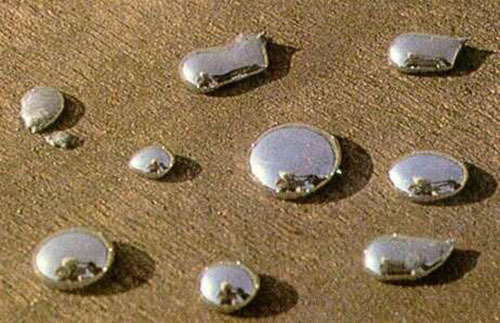
Mercurius corrosivus
Mercury(II) chloride (mercuric chloride, HgCl2) · Hydrargyrum bichloratum,Mercuric chloride. · Mineral
People who respond best to Merc. corr. are prone to anxiety and restlessness, which may develop into delirium and stupor during illness. They often feel detached or disconnected from others, and may stare blankly at people when they are talking, without comprehending what they are saying.
Symptoms linked to Merc. corr. tend to be excessive, rapid, and violent, often centering on the digestion. The remedy is used for colitis or dysentery with hot, foul-smelling stools, cutting pains, and constant straining, even after passing a stool. Great straining may be needed to empty the bladder. Burning in the throat, stomach, rectum, and bladder, with great susceptibility to the cold, may be linked to throat complaints treated by Merc. corr., such as swollen glands, a constant need to swallow despite pain, and ulcerated tonsils.
Key symptoms
- Incessant tenesmus of rectum not relieved by stool
- Tenesmus often involves the bladder simultaneously
- Hot, burning, scanty urine passed drop by drop
- Iris muddy in color, thick, neither contracts nor dilates; severe iritis
- Lids edematous, red, excoriated; excessive photophobia and acrid lachrymation
- Gonorrhea second stage with continuous tenesmus
- Ozena with perforation of nasal septum
- Gums purple, swollen, spongy; teeth loose; profuse salivation
Worse (aggravation)
Better (amelioration)

Corrosive Sublimate
This salt leads all other remedies in tenesmus of the rectum, which is incessant, and is not relieved by the stool. The tenesmus often involves the bladder as well. Bright's disease. Gonorrhœa; second stage, with continuous tenesmus. Destroys the secreting portions of the kidneys. This process is slow, but sure. Albuminuria in early pregnancy (Phosph later and at full term).
Head
Delirium, stupor. Frontal pain, congestion of head with burning in cheeks. Drawing pain in periosteum of skull.
Eyes
Pain behind eyeballs, as if forced out. Phlyctenulæ; deep ulcers on cornea. Excessive photophobia and acrid lachrymation. Iritis, ordinary or syphilitic (Give in association with atropin locally for prevention of adhesions). Pain severe at night; burning, shooting, tearing. Little tendency to pus formation. Iris muddy in color, thick, and neither contracts nor dilates. Retinitis albuminuric, ophthalmia neonatorum. Lids œdematous, red, excoriated. Severe burning. Soreness of the eyes.
Nose
Excessive coryza. Ozæna, with perforation of septum nasi (Kali bich). Rawness and smarting in nostrils. Post-nasal swelling, mucous membrane dry, red, and covered with bloody mucus.
Ears
Violent pulsations. Fetid pus.
Face
Swollen. Red, puffy. Lips black, swollen. Sordes. Facial neuralgia within the bones.
Mouth
Teeth loose. Gums purple, swollen, and spongy. Tongue swollen and inflamed. Salivation. Pyorrhea. Ptyalism. Taste salty and bitter.
Throat
Red, swollen, painful, intensely inflamed. Uvula swollen. Swallowing painful. Most pain in post-nasal with sharp pains to ears. Burning pain, with great swelling; worse, slight external pressure. All glands about thorax swollen.
Stomach
Incessant, green, bilious vomiting. Epigastrium very sensitive.
Abdomen
Bruised sensation; cecal region and transverse colon painful. Bloated; very painful to least touch.
Stool
Dysentery; tenesmus, not relieved by stool; incessant. Stool hot, bloody, slimy, offensive, with cutting pains and shreds of mucous membrane.
Respiratory
Pain in larynx as cut with knife. Aphonia. Cough, with bloody expectoration. Pulse rapid and intermittent. Stitches through side of chest.
Urine
Intense burning in urethra. Urine hot, burning, scanty or suppressed; bloody, greenish discharge. Albuminous. Tenesmus of bladder. Stabbing pain extending up urethra into bladder. Perspiration after urinating.
Male
Penis and testes enormously swollen. Chancres assume phagedænic appearance. Gonorrhœa; urethra orifice red, swollen; glans sore and hot. Discharge greenish, thick.
Fever
Chilly from slightest exposure. Profuse perspiration; surface cold.
Modalities
Worse, evening, night, acids, Better, while at rest.
Relationship
Compare: Ars; Lach; Leonurus-Mother-wort (Influences pelvic organs, allays spasm and nervous irritability, promotes secretion and reduces febrile excitement. Valuable in suppressed menses and lochia; dysentery; vomiting, frightful pains in abdomen, violent thirst. Tongue dry and cracked). Monsonia--An African plant belonging to the Geraniaceæ--(Used for dysentery in material doses).
Antidote: Calcium sulphide is antidotal to Bichloride poisoning. Use intravenous injection of 7 1/2 grains in 7 1/2 ozs boiled water.
Dose
Sixth potency. In solution 1:1000, hypodermically injected under conjunctiva in choroditis with progressive myopia. Stops immediately the severe aching pain behind eye-balls (Dr. G. D. Hallet).

Merc. cor. has more excoriation and burning, more activity and excitement.
Merc. is slower and more sluggish. Merc. cor. is violent and active in its movements, it takes hold and runs its course with greater activity. So with a mercury base we have often to prefer this salt.
In the eye symptoms there is more excoriation. The pains, burning, smarting, etc., in the eruptions and ulcers are more violent. In Merc. we have slow spreading ulcers, but in Merc. cor. there is great eating; it will spread over an area as large as your hand in a night. He has the mercurial odor and sweat, and he is sallow; he needs mercury, but a more active preparation than Merc. viv.

Mercurius corrosivus sublimatus. Corrosive sublimate. Mercuric chloride. HgCl2. Trituration. Solution.
Clinical
Antrum of Highmore, affections of. Aphthæ. Appendicitis. Bones, affections of. Bright's disease. Cancrum oris. Chancre. Diarrhœa. Dysentery. Eczema. Enteric fever. Eyes, affections of. Gums, affections of. Intestines, ulcerated. Intussusception. Iritis. Jaundice. Kidneys, inflammation of. Labour, puerperal fever. Measles. Miscarriage. Mouth, affections of. Mumps. Œsophagus, stricture of. Paralysis. Paraphimosis. Pemphigus. Perimetritis, Peritonitis. Prosopalgia. Rigg's disease. Supra-orbital neuralgia. Syphilis. Tabes mesenterica. Taste, disordered. Tenesmus. Throat, inflamed. Tongue, affections of. Uvula, elongated.

Corrosive sublimate. (HgCl2.)
Diseases of men, syphilitic; ulcers, with corroding, acrid pus; Bright's disease. Dysentery and summer complaints of intestinal canal, occurring from May to November. Tenesmus: of rectum, not > by stool (< by stool, Nux); incessant, persistent; stool hot, scanty, bloody, slimy, offensive; shreds of mucous membrane and terrible cutting; colicky pains. Tenesmus: of bladder, with intense burning in urethra; urine hot, burning, scanty or suppressed; in drops with great pain; bloody, brown, brick-dust sediment; albuminous. Gonorrhoea: second stage, greenish discharge, < at night; great burning and tenesmus.

Sight and Eyes
Excessive photophobia and lachrymation; the discharges are acrid; excoriating the lids and cheeks; pains very severe, especially at night.
Anus and Stool
Constant tenesmus and urging to stool, pain before, during, and after stool.
Urinary Organs
Urine scanty, bloody; albuminous, containing filaments; flocks or dark flesh-like pieces of mucous.
Urinary Organs
Great tenesmus of rectum and bladder at the same time.
-
Fluent coryza, with rawness and smarting in the nostrils.
-
Very distressing persistent tenesmus, and cutting colicky pains, after stool burning and tenesmus of rectum and bladder, stools frequent, nothing but mucus tinged with blood.
-
Chancres assuming a phagedenic appearance, and secreting a thin, ichorus pus.
-
Influenza, tightness across the chest, burning, cutting and stinging in trachea, with hoarseness and aphonia.

Phatak's chapter on Mercurius corrosivus is available in the app.
Read Phatak in the appClassical texts are in the public domain. Educational reference only — not medical advice.
