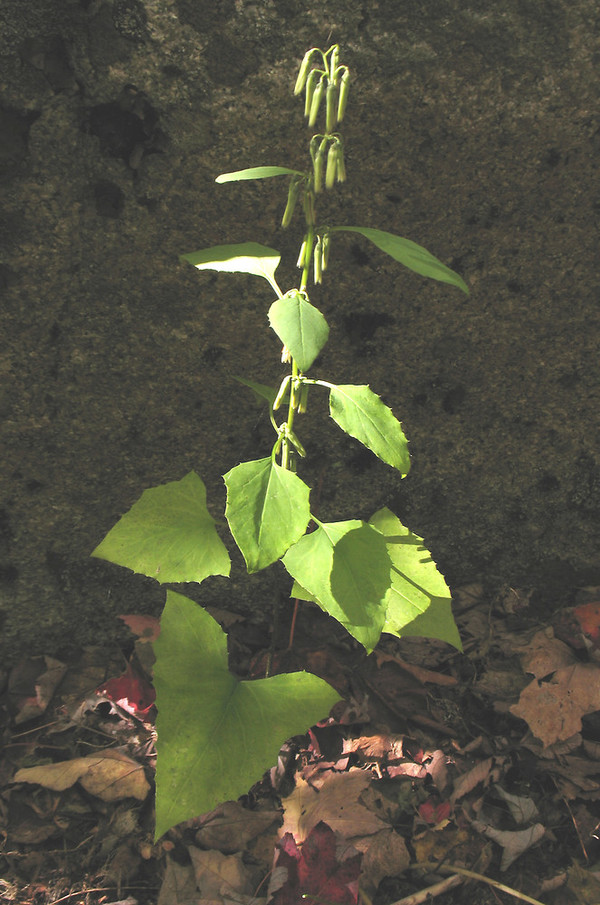
Nabalus
Nabalus (Prenanthes) serpentaria · Plant · Asteraceae
Nabalus suits patients with unusual sensitivity to external personal influences and magnetic fields, combined with irritability and occipital pain worsening in the evenings. The botanical affinity with Lactuca is expressed in somnolence and constipation. Mental states alternate between depression and buoyancy of spirits.
Key symptoms
- Constipation with somnolence
- Susceptibility to magnetism and personal aura of others
- Irritability of temper with occipital pain worse evenings
- Deep-seated frontal pains behind right eyeball
- Great lasting irritation of eyelid margins; stinging and smarting
- Throat sore with tickling and scraping worse lying down
- Depression followed by unusual buoyancy of spirits
Worse (aggravation)
- Evening (irritability and occipital pain)
- Lying down (throat scraping and tickling)
- Swallowing saliva (throat discomfort)

Nabalus serpentarius. Prenanthes serpentaria. White Lettuce. Rattlesnake-root. N. O. Compositæ (subord. Chicoraceæ). Tincture of whole fresh plant.
Clinical
Constipation. Ophthalmia.
Characteristics
Nabalus is a native American plant much used in domestic practice as a remedy for diarrhœa and dysentery. There is only one proving, with 1st and 3rd dilutions by a married woman, aged 19. The symptoms resemble somewhat those of its botanical relative, Lactuca, especially in constipation and somnolence. The most curious symptom was susceptibility to magnetism and to the personal aura of others. Irritability of temper and occipital pain was < evening.
Classical texts are in the public domain. Educational reference only — not medical advice.
