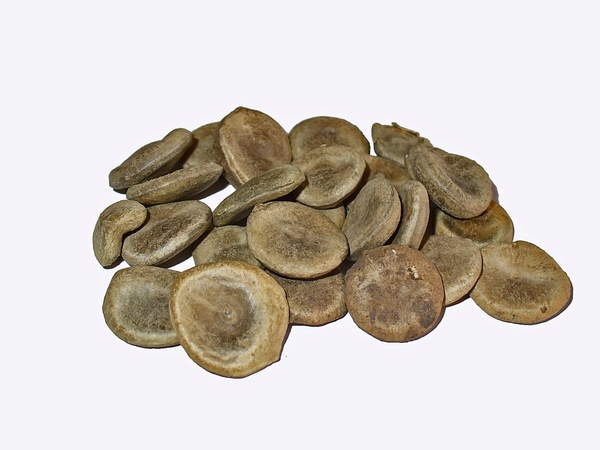
Nux vomica
Strychnos nux-vomica · Poison-nut tree, Quaker buttons (seeds), nux vomica, vomit weed,Strychnos nux-vomica · Plant · Loganiaceae
Nux vomica is chiefly linked to workaholic personalities who drive themselves to stress and excess. Ambitious and pushy, they thrive on challenges, and often work in entrepreneurial or managerial jobs. The typical pattern is of someone who is oversensitive and intolerant of criticism, yet perfectionist and often very critical of others. Such highly driven people tend to overload their bodies at play as well as at work. They tend to have high sex drives, consume too much rich food, coffee, and alcohol, and abuse drugs. This indulgence can create tension and sleeplessness, and often leads to digestive disorders (most seriously, peptic ulcers, irritable bowel syndrome, or liver problems when the body can no longer keep up with the lifestyle).
If the profile matches, Nux vomica is given for irritability, insomnia, digestive symptoms, colds and influenza, asthma, cystitis, and menstrual or pregnancy problems. Typically symptoms are worse for cold, noise, light, and odors.
Key symptoms
- irritability
- overly critical nature
- tendency to be highly driven and ambitious
- chilliness
- desire for rich foods and
- stimulants
- indigestion and constipation
- sleeplessness
Worse (aggravation)
- Worse in morning
- Worse from mental exertion
- Worse after eating
- Worse from touch
- Worse from spices and stimulants
- Worse from narcotics
- Worse in dry weather and cold
Better (amelioration)
- Better from a nap if allowed to finish it
- Better in evening while at rest
- Better in damp, wet weather
- Better from strong pressure

Poison-nut
Is the greatest of polychrests, because the bulk of its symptoms correspond in similarity with those of the commonest and most frequent of diseases. It is frequently the first remedy, indicated after much dosing, establishing a sort of equilibrium of forces and counteracting chronic effects.
Nux is pre-eminently the remedy for many of the conditions incident to modern life. The typical Nux patient is rather thin, spare, quick, active, nervous, and irritable. He does a good deal of mental work; has mental strains and leads a sedentary life, found in prolonged office work, overstudy, and close application to business, with its cares and anxieties. This indoor life and mental strain seeks stimulants, coffee, wine, possibly in excess; or, again, he hopes to quiet his excitement, by indulging in the sedative effects of tobacco, if not really a victim, to the seductive drugs, like opium, etc. These things are associated with other indulgences; at table, he takes preferably rich and stimulating food; wine and women play their part to make him forget the close application of the day. Late hours are a consequence; a thick head, dyspepsia, and irritable temper are the next day's inheritance. Now he takes some cathartic, liver pills, or mineral water, and soon gets into the habit of taking these things, which still further complicate matters. Since these frailties are more yielded to by men than women. Nux is pre-eminently a male remedy. These conditions, produce an irritable, nervous system, hypersensitive and over-impressionable, which Nux will do much to soothe and calm. Especially adapted to digestive disturbances, portal congestion, and hypochondrical states depending thereon. Convulsions, with consciousness; worse, touch, moving. Zealous fiery temperament. Nux patients are easily chilled, avoid open air, etc. Nux always seems to be out of tune; inharmonious spasmodic action.
Mind
Very irritable: sensitive to all impressions. Ugly, malicious. Cannot bear noises, odors, light, etc. Does not want to be touched. Time passes too slowly. Even the least ailment affects her greatly. Disposed to reproach others. Sullen, fault-finding.
Head
Headache in occiput or over eyes, with vertigo; brain feels turning in a circle. Oversensitiveness. Vertigo, with momentary loss of consciousness. Intoxicated feeling; worse, morning, mental exertion, tobacco, alcohol, coffee, open air. Pressing pain on vertex, as if a nail driven in. Vertigo in morning and after dinner. Scalp sensitive. Frontal headache, with desire to press the head against something. Congestive headache, associated with hæmorrhoids. Headache in the sunshine (Glon; Nat carb). Feels distended and sore within, after a debauch.
Eyes
Photophobia; much worse in morning. Smarting dry sensation in inner canthi. Infra-orbital neuralgia, with watering of eyes. Optic nerve atrophy, from habitual use of intoxicants. Paresis of ocular muscles; worse, tobacco and stimulants. Orbital twitching radiating towards the occiput, Optic neuritis.
Ears
Itching in ear through Eustachian tube. Auditory canal dry and sensitive. Otalgia; worse in bed. Hyperæsthesia of auditory nerves; loud sounds are painful, and anger him.
Nose
Stuffed up, at night especially. Stuffy colds, snuffles, after exposure to dry, cold atmosphere; worse, in warm room. Odors tend to produce fainting. Coryza: fluent in daytime; stuffed up at night and outdoors; or alternates between nostrils. Bleeding in morning (Bry). Acrid discharge, but with stuffed up feeling.
Mouth
Jaws, contracted. Small aphthous ulcers, with bloody saliva. First half of tongue clean; posterior covered with deep fur; white, yellow, cracked edges. Teeth ache; worse, cold things. Gums swollen, white, and bleeding.
Throat
Rough, scraped feeling. Tickling after waking in morning. Sensation of roughness, tightness, and tension. Pharynx constricted. Uvula swollen. Stitches into ear.
Stomach
Sour taste, and nausea in the morning, after eating. Weight and pain in stomach; worse, eating, some time after. Flatulence and pyrosis. Sour, bitter eructations. Nausea and vomiting, with much retching. Ravenous hunger, especially about a day before an attack of dyspepsia. Region of stomach very sensitive to pressure (Bry; Ars). Epigastrium bloated, with pressure s of a stone, several hours after eating. Desire for stimulants. Loves fats and tolerates them well (Puls opposite). Dyspepsia from drinking strong coffee. Difficult belching of gas. Wants to vomit, but cannot.
Abdomen
Bruised soreness of abdominal walls (Apis; Sulph). Flatulent distension, with spasmodic colic. Colic from uncovering. Liver engorged, with stitches and soreness. Colic, with upward pressure, causing short breath, and desire for stool. Weakness of abdominal ring region. Strangulated hernia (Op). Forcing in lower abdomen towards genitals. Umbilical hernia of infants.
Stool
Constipation, with frequent ineffectual urging, incomplete and unsatisfactory; feeling as if part remained unexpelled. Constriction of rectum. Irregular, peristaltic action; hence frequent ineffectual desire, or passing but small quantities at each attempt. Absence of all desire for defecation is a contra-indication. Alternate constipation and diarrhœa-after abuse of purgatives. Urging to stool felt throughout abdomen. Itching, blind hæmorrhoids, with ineffectual urging to stool; very painful; after drastic drugs. Diarrhœa after a debauch; worse, morning. Frequent small evacuations. Scanty stool, with much urging. Dysentery; stools relieve pains for a time. Constant uneasiness in rectum. Diarrhœa, with jaundice (Dig).
Urine
Irritable bladder; from spasmodic sphincter. Frequent calls; little and often. Hæmaturia (Ipec; Tereb). Ineffectual urging, spasmodic and strangury. Renal colic extending to genitals, with dribbling urine. While urinating, itching in urethra and pain in neck of bladder.
Male
Easily excited desire. Emissions from high living. Bad effects of sexual excesses. Constrictive pain in testicles. Orchitis (Hama; Puls). Spermatorrhœa, with dreams, backache, burning in spine, weakness and irritability.
Female
Menses too early, lasts too long; always irregular, blood black (Cycl; Lach; Puls) with faint spells. Prolapsus uteri. Dysmenorrhœa, with pain in sacrum, and constant urging to stool. Inefficient labor-pains; extend to rectum, with desire for stool and frequent urination (Lil). Desire too strong. Metrorrhagia, with sensation as if bowels wanted to move.
Respiratory
Catarrhal hoarseness, with scraping in throat. Spasmodic constriction. Asthma, with fullness in stomach, morning or after eating. Cough, with sensation as if something were torn loose in chest. Shallow respiration. Oppressed breathing. Tight, dry hacking cough; at times with bloody expectoration. Cough brings on bursting headache and bruised pain in epigastric region.
Back
Backache in lumbar region. Burning in spine; worse, 3 to 4 am. Cervico-brachial neuralgia; worse, touch. Must situp in order to turn in bed. Bruised pain below scapulæ. Sitting is painful.
Extremities
Arms and hands go to sleep. Paresis of arms, with shocks. Legs numb; feel paralyzed; cramps in calves and soles. Partial paralysis, from overexertion or getting soaked (Rhus). Cracking in knee-joints during motion. Drags his feet when walking. Sensation of sudden loss of power of arms and legs in the morning.
Sleep
Cannot sleep after 3 am until towards morning; awakes feeling wretchedly. Drowsy after meals, and in early evening. Dreams full of bustle and hurry. Better after a short sleep, unless aroused.
Skin
Body burning hot, especially face; yet cannot move or uncover without feeling chilly. Urticaria, with gastric derangement. Acne; skin red and blotchy.
Fever
Cold stage predominates. Paroxysms anticipate in morning. Excessive rigor, with blueness of finger-nails. Aching in limbs and back, and gastric symptoms. Chilly; must be covered in every stage of fever. Perspiration sour; only one side of body. Chilliness on being uncovered, yet he does not allow being covered. Dry heat of the body.
Modalities
Worse, morning, mental exertion, after eating, touch, spices, stimulants, narcotics, dry weather, cold. Better, from a nap, if allowed to finish it; in evening, while at rest, in damp, wet weather (Caust), strong pressure.
Relationship
Nux seeds contain copper, notice the cramp-causing proclivites of both. Complementary; Sulphur; Sepia.
Inimical: Zinc.
Compare: Strychnia.
Compare: Kali carb; Hydr; Bry; Lyc; Graph.
Antidotes: Coff; Ignat; Cocc.
Dose
First to thirtieth potency and higher. Nut is said to act best given in the evening.

Antidote
Everywhere in this remedy we observe the striking oversensitiveness of the patient; it is brought out in all the symptoms.
Irritable; oversensitive to noise, to light, to the least current of air, to his surroundings; extremely touchy in regard to his food; many kinds of food disturb, strong foods disturb; he is aggravated by meat; craves stimulants, pungent, bitter, succulent things, something to brace him up.
Oversensitive to medicines. One reason why there are so many Nux patients is because people have been overdrugged by the old school. When a patient comes from the old school and had prescribing, having had stimulants and tonics to brace him up, wine and stimulants of all sorts, it is sometimes impossible to get reliable symptoms, to get the patient settled down, until we give Nux as an antidote.

Strychnos nux vomica. Poison nut. N. O. Loganiaceæ. Tincture and Trituration of imported seeds.
Clinical
Acne rosacea. Alcoholism. Amaurosis. Amblyopia. Anger, effects of. Apoplexy. Asthma. Bilious attack. Biliousness. Bladder, affections of. Bone, nodes on. Bra in, affections of. Breath, sour. Carriage-sickness. Catarrh. Clavus. Cold. Colic. Constipation. Convulsions. Cough. Cramp. Delirium. Diarrhœa. Dysentery. Dyspepsia. Emissions. Epilepsy. Erotomania. Eyes, affections of; gouty inflammation of. Gall-stones. Gastrodynia. Gout. Hæmorrhoids. Headache. Heart, affections of. Hernia. Hydrocele. Hypochondriasis. Impotence. Intermittent fever. Lisping. Liver disorders. Locomotor ataxy. Lumbago. Masturbation. Muscæ volitantes. Myelitis. Night-blindness. Nightmare. Nose, affections of. Nymphomania. Paralysis; spastic. Paraphimosis. Pregnancy, affections of; spurious. Pylorus, disease of. Renal calculi. Sea-sickness. Sexual perversion. Sleep, abnormal. Speech, disordered. Spermatorrhœa. Strabismus. …

Poison Nut. (Loganiaccae.)
Adapted to thin, irritable, careful, zealous persons with dark hair and bilious or sanguine temperament. Disposed to be quarrelsome, spiteful, malacious; nervous and melancholic. Debauchers of a thin, irritable, nervous disposition; prone to indigestion and haemorrhoids (persons with light hair, blue eyes, Lob.). "Nux is chiefly successful with persons of an ardent character; of an irritable, impatient temperament, disposed to anger, spite or deception." - Hahnemann. Anxiety with irritability and inclination to commit suicide, but is afraid to die. Hypochondriac: literary, studious persons, who are too much at home, suffer from want of exercise, with gastric, abdominal complaints and costiveness; especially in drunkards. Oversensitive; to external impressions; to noise, odors, light or music (Nux m.); trifling ailments are unbearable (Cham.); every harmless word offends (Ign.). Persons who are very particular, careful, but inclined to become easily excited or angered; irascible and …
-
Careful, jealous persons, inclined to get excited and, angry or of a spiteful malicious disposition.
-
Hypochondric mood, worse after eating, especially in those of sedentary habits, or in those who dissipate, with abdominal sufferings, constipation and hemorrhoids.
-
Coryza; fluent during the day, and stopped up at night.
-
Constipation, with frequent and ineffectual desire for stool, and sensation of constriction of rectum
-
After stool, sensation as if more remainend but could not be evacuated.
-
Menses a few days before the time, copious, or keeping on for several days, with complaints at the onset and remaining after.
-
Dry, fatiguing cough in the evening after lying .down, or very early in the morning, also with roughness, rawness, and scraping in the chest.

Phatak's chapter on Nux vomica is available in the app.
Read Phatak in the appClassical texts are in the public domain. Educational reference only — not medical advice.
