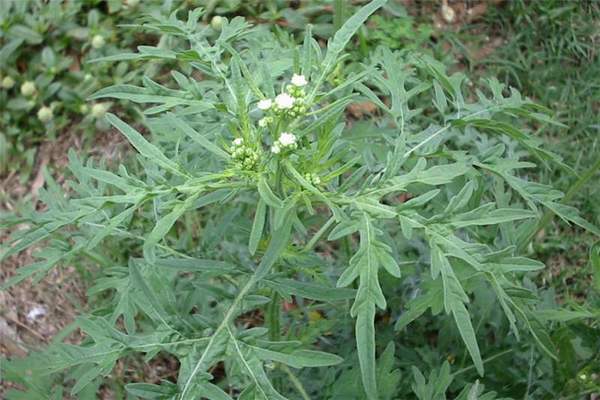
Parthenium hysterophorus
Plant · Asteraceae
Parthenium hysterophorus suits patients with malarial fevers and spleen affections, especially after quinine treatment. It is particularly indicated when there is debility with amenorrhoea, lactation disturbances, and Cheyne-Stokes breathing pattern.
Key symptoms
- Headache extending to nose; head and nose feel swollen
- Eyes heavy with aching eyeballs
- Teeth feel on edge and too long
- Tinnitus and pain in ears
- Spleen affections and pain in left hypochondrium
- Amenorrhoea with general debility
- Cheyne-Stokes breathing
- Increased flow of milk
- Disordered vision with ringing in ears
Worse (aggravation)
- Worse after sleep
- Worse from sudden motion
Better (amelioration)
- Better after rising
- Better from walking about

Bitter-broom (PARTHENIUM - ESCOBA AMARGO)
A Cuban remedy for fevers, especially malarial. Increased flow of milk. Amenorrhœa and general debility. Cheyne-Stokes breathing. After Quinine.
Head
Aches, extending to nose; feels swelled; pain in frontal eminence. Eyes heavy; eyeballs ache. Ringing in ears. Pain at root of nose; feels swollen. Aching in teeth. Teeth feel on edge; too long. Disordered vision. Tinnitus and pain in ears.
Abdomen
Pain in left hypochondrium. Spleen affections.
Modalities
Worse, after sleep, sudden motion. Better, after rising, and walking about.
Relationship
Compare: China; Ceanoth; Helianth.

Parthenium hysterophorus. Bitter-broom. Escoba amarga. N. O. Compositæ (tribe Heliantheæ). Tincture of the dry plant. Trituration or solution of the alkaloid Parthenia.
Clinical
Abortion. Amenorrhœa. Cheyne-Stokes breathing. Debility. Dyspepsia. Ear, affections of. Fevers. Headache; extending to nose. Liver, pain in. Milk, increased. Neuralgia, periodic. Salivation. Spleen, affections of. Syncope. Toothache. Vision, disordered.
Characteristics
E. Fornias brought Parthen. to light (H. R., i. 42, 71). It is a Cuban remedy of great repute in the treatment of fevers. An alkaloid Parthenia was isolated by C. J. Ulrice, of Havana, and Dr. J. L. Duenas published experiments with this on the human organism and on animals. Dr. B. H. B. Sleight proved increasing doses of the Ø tincture, and later on of 6x, which reproduced most of the symptoms of the first proving. The Schema is made up chiefly of Sleight's symptoms; additions from Duenas being marked (D). Dr. Ramirez Tovar has reported these cures by Parthenia: …
Classical texts are in the public domain. Educational reference only — not medical advice.
