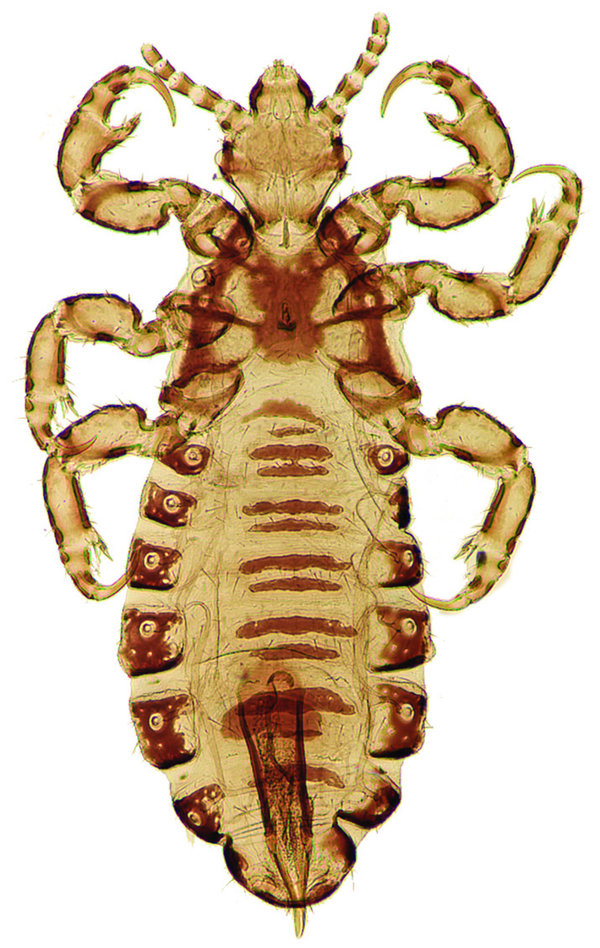
Pediculus
Pediculus capitis (head louse) · Animal
Pediculus suits children with hereditary psoric conditions, skin affections, and alternating mental states of excessive merriment and melancholy. It is indicated for colic and diarrhoea after eating and for cases with stammering or speech difficulty.
Key symptoms
- Eagerness and aptitude for study and work
- Unusual fluency of words in a stammerer
- Miliary eruptions with itching and formication almost all over
- Jerks and starts in evening when sitting or lying
- Constriction of pharynx
- Irritability with causeless anger
- Excessive merriment alternating with causeless melancholy
Worse (aggravation)
- Worse from contact
- Worse in the evening
- Worse after eating and after dining
- Worse from standing, stooping, and walking

Pediculus capitis. Head Louse. N. O. Hemiptera. Tincture of the insects.
Clinical
Children, diseases of. Colic. Diarrhœa. Ganglion of foot. Hair, falling off. Irritation. Œdema. Psora, hereditary. Skin, affections of. Stammering.
Characteristics
Pediculus belongs to the same class of remedies as Cimex and Trombidium. It was proved by Mure, who says that he thought that nature pointed to the Louse as a specific for hereditary psora, in which belief he was strengthened by the fact that Psorinum develops pediculosis in healthy persons, and he adds that he has found Pedic. one of the most useful agents in diseases of children. This is the only clinical observation I have met with in regard to the remedy. Five persons, took part in the proving, but no particulars are given as to the doses they took. All developed symptoms. Among these were: Eagerness and aptitude for study and work. One prover, a stammerer, had unusual fluency of words. Constriction of pharynx. Jerks and starts in evening when sitting or …
Classical texts are in the public domain. Educational reference only — not medical advice.
