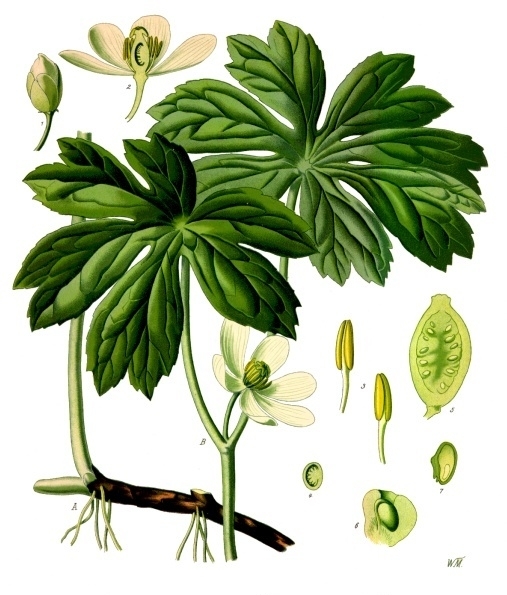
Podophyllinum
Podophyllum peltatum (podophyllin resin) · May apple, American mandrake. · Plant · Berberidaceae
Those who benefit most from Podophyllum tend to be forgetful, particularly of words, depressed, afraid that they may die, and unrefreshed by sleep, which is restless.
Digestive tract disorders such as gastroenteritis are typically treated with this remedy. Generally, the lower part of the digestive tract and the liver are most affected. The appetite often wanes, perhaps because everything suddenly tastes sour or putrid, or because the smell of food is loathsome. Sour belching, vomiting, or diarrhea, particularly after eating or drinking, are typical of this symptom picture. Podophyllum may ease abdominal cramps, or profuse, painless diarrhea, preceded by noisy gurgling. Diarrhea may be accompanied by a sinking feeling, as if the pelvic contents are going to prolapse.
Key symptoms
- Is especially adapted to persons of bilious temperament.
- It affects chiefly the duodenum, small intestines, liver, and rectum The Podophyllum disease is a...
- Stool is watery with jelly-like mucus, painless, profuse.
- Loquacity and delirium from eating acid fruits.
- Depression of spirits.
- Vertigo, with tendency to fall forward.
- Headache, dull pressure, worse morning, with heated face and bitter taste; alternating with diarrhœa.
- Grinding the teeth at night; intense desire to press the gums together (Phytol).
Worse (aggravation)
Better (amelioration)

May-apple (PODOPHYLLUM)
Is especially adapted to persons of bilious temperament. It affects chiefly the duodenum, small intestines, liver, and rectum The Podophyllum disease is a gastro-enteritis with colicky pain and bilious vomiting. Stool is watery with jelly-like mucus, painless, profuse. Gushing and offensive. Many troubles during pregnancy; pendulous abdomen after confinement; prolapsus uteri; painless cholera morbus. Torpidity of the liver; portal engorgement with a tendency to hæmorrhoids, hypogastric pain, fullness of superficial veins, jaundice.
Mind
Loquacity and delirium from eating acid fruits. Depression of spirits.
Head
Vertigo, with tendency to fall forward. Headache, dull pressure, worse morning, with heated face and bitter taste; alternating with diarrhœa. Rolling of head from side to side, moaning and vomiting and eyelids half closed. Child perspires on head during sleep.
Mouth
Grinding the teeth at night; intense desire to press the gums together (Phytol). Difficult dentition. Tongue broad, large, moist. Foul, putrid taste. Burning sensation of tongue.
Stomach
Hot, sour belching; nausea and vomiting. Thirst for large quantities of cold water (Bry). Vomiting of hot, frothy mucus. Heartburn; gagging or empty retching. Vomiting of milk.
Abdomen
Distended; heat and emptiness. Sensation of weakness or sinking. Can lie comfortably only on stomach. Liver region painful, better rubbing part. Rumbling and shifting of flatus in ascending colon.
Rectum
Cholera infantum and morbus. Diarrhœa of long standing; early in morning; during teething, with hot, glowing cheeks while being bathed or washed; in hot weather after acid fruits. Morning, painless diarrhœa when not due to venous stasis or intestinal ulceration. Green, watery, fetid, profuse, gushing. Prolapse of rectum before or with stool. Constipation; clay-colored, hard, dry, difficult. Constipation alternating with diarrhœa (Ant crud). Internal and external piles.
Female
Pain in uterus and right ovary, with shifting noises along ascending colon. Suppressed menses, with pelvic tenesmus. Prolapsed uteri, especially after parturition. Hæmorrhoids, with prolapsus ani during pregnancy.
Extremities
Pain between shoulders, under right scapula, in loins and lumbar region. Pain in right inguinal region; shoots down inner thigh to knees. Paralytic weakness on left side.
Fever
Chill at 7 am, with pain in hypochondria, and knees, ankles, wrists, Great loquacity during fever. Profuse sweat.
Modalities
Worse, in early morning, in hot weather, during dentition.
Relationship
Compare: Mandragora-also called mandrake--(must not be confounded with Podoph. Great desire for sleep; exaggeration of sounds and enlarged vision. Bowels inactive; stools large, white and hard). Aloe; Chelid; Merc; Nux; Sulph. Prunella-Self-head--(Colitis).
Dose
Tincture to sixth potency. The 200th and 1000th seem to do good work in cholera infantum, when indicated.

This remedy is seldom used except in acute affections, but it is a long acting and deep acting drug; it produces a powerful impression on the economy; it relates to the deep-seated miasms.
Abdomen
It affects profoundly the abdominal viscera. It shows its symptoms largely on the abdominal organs, the pelvic organs, and the liver. The abdomen seems to be the earliest seat of attack. It produces such an impression upon the stomach and intestinal canal that the healthy action is impaired, digestion and assimilation cease.
Everything taken into the stomach becomes sour. The glands of the stomach are as if paralyzed; there is no digestion; this goes on until we have vomiting and diarrhea. During this there is a wonderful disturbance in the abdomen; rumbling; gurgling as if animals were floundering about; clinically, as if fish were turning and tossing in a pond, as we have seen them before a storm.

Podophyllum peltatum. May Apple. Mandrake (American). N. O. Berberidaceæ (by some placed in the Ranunculaceæ and closely related to both). Tincture of root gathered after fruit has ripened; of whole fresh plant; of ripe fruit. Solution of resinous extract, Podophyllin.
Clinical
Acidity. Amenorrhœa. Anus, Prolapse of. Asthma, bronchial. Bilious attack. Bronchitis. Cataract. Cholera infantum. Cornea, ulcer of. Dentition. Diarrhœa; camp. Duodenum, catarrh of. Dysentery. Dysmenia. Dyspepsia; from calomel. Fevers. Flatulence. Gagging. Gall-stones. Gastric catarrh. Goître. Hæmorrhoids. Headache, sick; bilious. Heart, pains in. Hydrocephaloid. Intermittents. Jaundice. Leucoma. Liver, affections of. Ophthalmia. Ovaries, pains in; numbness in; tumour of. Palpitation. Pneumonia. Proctitis. Prostatitis. Pustules. Sciatica. Stomatitis. Strabismus. Taste, lost, perverted; illusions of. Tenesmus. Tongue, burning in. Urticaria. Uterus, prolapse of. Whooping-cough. Worms.

May Apple. (Berberidaceae)
Adapted to persons of bilious temperament who suffer from gastro- intestinal derangement, especially after abuse of mercury; "bilious attacks.". Thirst for large quantities of cold water (Bry.). Pains: sudden shocks of jerking pains. Depression of spirits, imagines he is going to die or be very ill (Ars.); disgust for life. Headache alternates with diarrhoea (Aloe); headache in winter, diarrhoea in summer. Painless cholera morbus; cholera infantum (Phyt.). Violent cramps in feet, calves, thighs, watery, painless stools. Difficult dentition: moaning, grinding the teeth at night; intense desire to press the gums together (Phyt.); head hot and rolling from side to side (Bell., Hell.). Diarrhoea: of long standing; early in morning, continues through forenoon, followed by natural stool in evening (Aloe), and accompanied by sensation of weakness or sinking in abdomen or rectum. Diarrhoea of children: during teething; after eating; *while being bathed or washed; of dirty water soaking napkin …

Head
Head rolling from side to side, with moaning during dentition, or with summer complaint.
Mouth and Throat
Grinding teeth and rolling head from side to side with moaning (during dentition).
Stomach
Continual gagging in summer diarrhoea of children.
Abdomen
Cramp-like pain in the abdomen with actual retraction of the abdominal muscles.
Female Sexual Organs
Prolapus uteri after over-lifting or straining, also after parturition.
Sleep and Dreams
Drowsy, half-closed eyes; rolling head from side to side, with moaning and whining, especially children.
Chill, Fever, and Sweat
Time of chill, 7 a. m.
Chill, Fever, and Sweat
Great, even delirious loquacity during chill and sweat.
-
Head hot, rolling from side to side with moaning; during dentition, or with bowel disorders.
-
2 Grinding of teeth at night, especially during dentition.
-
Diarrhoea with great sinking at the epigastrium; sensation as if everything would drop through the pelvis.
-
Morning diarrhoea, stools watery,. green, yellow, sour. with much flatulence and burning in the anus.
-
Biliousness with nausea and giddiness; tendency to bilious vomiting and purging.
-
Prolapsus ani with every stool, or after any sudden motion, such as sneezing or coughing,
-
Painting with sensation of emptiness in abdomen after stool.

Phatak's chapter on Podophyllinum is available in the app.
Read Phatak in the appClassical texts are in the public domain. Educational reference only — not medical advice.
