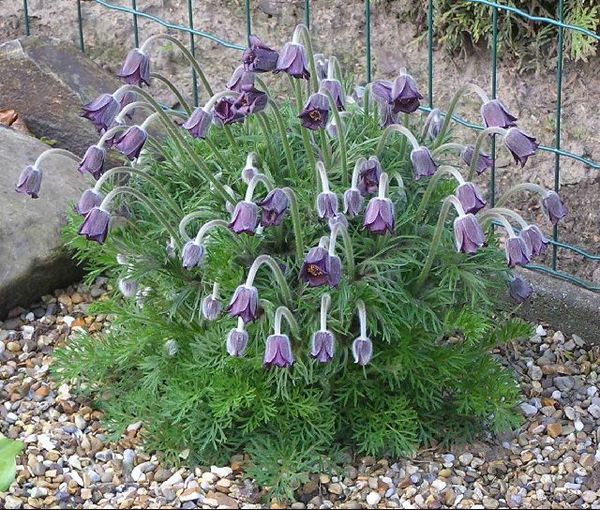
Pulsatilla pratensis
Anemone pratensis (sometimes) · Small pasque flower, meadow anemone, wind flower · Plant · Ranunculaceae
People who respond best to Pulsatilla are sweet-natured, gentle, and compliant. They will avoid confrontation, but their moods change frequently and rapidly, and they can be stubborn in their demands for attention and sympathy. Their physical symptoms can be equally changeable. Easily moved to laughter or tears, they are highly prone to weepiness when ill, but are soon consoled by hugs. Other common traits are a dislike of stuffy rooms or fatty foods, a lack of thirst, and a preference for fresh air.
Pulsatilla is given for labor, menstruation, menopause, and pregnancy problems. It is used for respiratory illness marked by yellowy-green catarrh, eye complaints, and indigestion with variable symptoms.
Key symptoms
- weepiness
- conditions that improve for sympathy
- desire for open air
- thick, yellowy-green catarrh
- changeable mood
Worse (aggravation)
- from heat
- rich fat food
- after eating
- towards evening
- warm room
- lying on left or on painless side when allowing feet to hang down
Better (amelioration)
- open air
- motion
- cold applications
- cold food and drinks
- though not thirsty

Wind Flower (PULSATILLA)
The weather-cock among remedies.
The disposition and mental state are the chief guiding symptoms to the selection of Pulsatilla. It is pre-eminently a female remedy, especially for mild, gentle, yielding disposition. Sad, crying readily; weeps when talking; changeable, contradictory. The patient seeks the open air; always feels better there, even though he is chilly. Mucous membranes are all affected. Discharges thick, bland, and yellowish-green. Often indicated after abuse of Iron tonics, and after badly-managed measles. Symptoms ever changing. Thirstless, peevish, and chilly. When first serious impairment of health is referred to age of puberty. Great sensitiveness. Wants the head high. Feels uncomfortable with only one pillow. Lies with hands above head.
Mind
Weeps easily. Timid, irresolute. Fears in evening to be alone, dark, ghost. Likes sympathy. Children like fuss and caresses. Easily discouraged. Morbid dread of the opposite sex. Religious melancholy. Given to extremes of pleasure and pain. Highly emotional. Mentally, an April day.
Head
Wandering stitches about head; pains extend to face and teeth; vertigo; better in open air. Frontal and supra-orbital pains. Neuralgic pains, commencing in right temporal region, with scalding lachrymation of affected side. Headache from overwork. Pressure on vertex.
Ears
Sensation as if something were being forced outward. Hearing difficult, as if the ear were stuffed. Otorrhœa. Thick, bland discharge; offensive odor. External ear swollen and red. Catarrhal otitis. Otalgia, worse at night. Diminishes acuteness of hearing.
Eyes
Thick, profuse, yellow, bland discharges. Itching and burning in eyes. Profuse lachrymation and secretion of mucus. Lids inflamed, agglutinated. Styes. Veins of fundus oculi greatly enlarged. Ophthalmia neonatorum. Subacute conjunctivitis, with dyspepsia; worse, in warm room.
Nose
Coryza; stoppage of right nostril, pressing pain at root of nose. Loss of smell. Large green fetid scales in nose. Stoppage in evening. Yellow mucus; abundant in morning. Bad smells, as of old catarrh. Nasal bones sore.
Face
Right-sided neuralgia, with profuse lachrymation. Swelling of lower lip, which is cracked in middle. Prosopalgia towards evening till midnight; chilly, with pain.
Mouth
Greasy taste. Dry mouth, without thirst; wants it washed frequently. Frequently licks the dry lips. Crack in middle of lower lip. Yellow or white tongue, covered with a tenacious mucus. Toothache; relieved by holding cold water in mouth (Coff). Offensive odor from mouth (Merc; Aur). Food, especially bread, tastes bitter. Much sweet saliva. Alternations of taste, bitter, bilious, greasy, salty, foul. Loss of taste. Desire for tonics.
Stomach
Averse to fat food, warm food, and drink. Eructations; taste of food remains a long time; after ices, fruits, pasty. Bitter taste, diminished taste of all food. Pain as from subcutaneous ulceration. Flatulence. Dislikes butter (Sang). Heartburn. Dyspepsia, with great tightness after a meal; must loosen clothing. Thirstlessness, with nearly all complaints. Vomiting of food eaten long before. Pain in stomach an hour after eating (Nux). Weight as from a stone, especially in morning on awakening. Gnawing, hungry feeling (Abies c). Perceptible pulsation in pit of stomach (Asaf). All-gone sensation, especially in tea drinkers. Waterbrash, with foul taste in the morning.
Abdomen
Painful, distended; loud rumbling. Pressure as from a stone. Colic, with chilliness in evening.
Stool
Rumbling, watery; worse, night No two stools alike. After fruit (Ars; Chin). Blind hæmorrhoids, with itching and sticking pains. Dysentery; mucus and blood, with chilliness (Merc; Rheum). Two or three normal stools daily.
Urine
Increased desire; worse when lying down. Burning in orifice of urethra during and after micturition. Involuntary micturition at night, while coughing or passing flatus. After urinating, spasmodic pain in bladder.
Female
Amenorrhœa (Cimicif; Senec; Polygon). Suppressed menses from wet feet, nervous debility, or chlorosis. Tardy menses. Too late, scanty, thick, dark, clotted, changeable, intermittent. Chilliness, nausea, downward pressure, painful, flow intermits. Leucorrhœa acrid, burning, creamy. Pain in back; tired feeling. Diarrhœa during or after menses.
Male
Orchitis; pain from abdomen to testicles. Thick, yellow discharge from urethra; late stage of gonorrhœa. Stricture; urine passed only in drops, and stream interrupted (Clemat). Acute prostatitis. Pain and tenesmus in urinating, worse lying on back.
Respiratory
Capricious hoarseness; comes and goes. Dry cough in evening and at night; must sit up in bed to get relief; and loose cough in the morning, with copious mucous expectoration. Pressure upon the chest and soreness. Great soreness of epigastrium. Urine emitted with cough (Caust). Pain as from ulcer in middle of chest. Expectoration bland, thick, bitter, greenish. Short breath, anxiety, and palpitation when lying on left side (Phos). Smothering sensation on lying down.
Sleep
Wide awake in the evening; first sleep restless. Wakes languid, unrefreshed. Irresistible sleepiness in afternoon. Sleeps with hands over head.
Back
Shooting pain in the nape and back, between shoulders; in sacrum after sitting.
Extremities
Drawing, tensive pain in thighs and legs, with restlessness, sleeplessness and chilliness. Pain in limbs, shifting rapidly; tensive pain, letting up with a snap. Numbness around elbow. Hip-joint painful. Knees swollen, with tearing, drawing pains. Boring pain in heels toward evening; suffering worse from letting the affected limb hang down (Vipera). Veins in forearms and hands swollen. Feet red, inflamed, swollen. Legs feel heavy and weary.
Skin
Urticaria, after rich food, with diarrhœa, from delayed menses, worse undressing. Measles. Acne at puberty. Varicose veins.
Fever
Chilliness, even in warm room, without thirst. Chilly with pains, in spots, worse evening. Chill about 4 pm. Intolerable burning heat at night, with distended veins; heat in parts of body, coldness in other. One-sided sweat; pains during sweat. External heat is intolerable, veins are distended. During apyrexia, headache, diarrhœa, loss of appetite, nausea.
Modalities
Worse, from heat, rich fat food, after eating, towards evening, warm room, lying on left or on painless side when allowing feet to hang down. Better, open air, motion, cold applications, cold food and drinks, though not thirsty.
Relationship
Penthorum, often indicated after Pulsatilla in later colds. Ionesia Asoca-Saraca indica--(Amenorrhœa. Menorrhagia-acts powerfully on female organs. Abdominal pain). Atriplex (Uterine symptoms, amenorrhœa; hysteria, coldness between shoulders, dislike of warm food, craves strange foods, palpitation, sleeplessness). Pulsatilla Nuttaliana, identical effects.
Compare: Cyclamen; Kali bich; Kali sulph; Sulphur. Pimenta-Allspice--(one-sided neuralgias, parts of body hot and cold).
Anagyris (headache, amenorrhœa).
Complementary: Coffea; Chamom; Nux.
Dose
Third to thirtieth attenuation.
It is said to be a very good medicine for women, for blondes, especially for tearful blondes.
Mind
It is one of the polychrests and one of the medicines most frequently used, as well as often abused.
The Pulsatilla patient is an interesting one, found in any household where there are plenty of young girls.
She is tearful, plethoric, and generally has little credit for being sick from her appearances; yet she is most nervous, fidgety, changeable, easily led and easily persuaded. While she is mild, gentle and tearful, yet she is remarkably irritable, not in the sense of pugnacity, but easily irritated, extremely touchy, always feels slighted or fears she will be slighted; sensible to every social influence.

Pulsatilla nigricans. Anemone pratensis. Pulsatilla pratensis. Pasque Flower. (Sunny, sandy pastures in Central and Northern Europe and parts of South of England.) N. O. Ranunculaceæ. Tincture of entire fresh plant when in flower (it flowers in spring and again in autumn).
Clinical
Acne. Amaurosis. Amenorrhœa. Anæmia. Appetite, depraved. Bladder, catarrh of. Blepharospasm. Breasts, pain behind. Bronchitis. Cataract. Catarrh. Chaps. Chest, pains in. Chilblains. Clavus. Cold. Cough. Diarrhœa; of phthisis. Distension. Dysmenia. Dyspepsia. Earache. Epilepsy. Epistaxis. Eyes, lachrymal sac, inflammation of; granular ophthalmia. Fear. Feet, soles painful. Fœtus, mal-position of. Freckles. Gonorrhœa. Gout. Hæmorrhoids. Hands, pains in. Heart, palpitation of. Heartburn. Hydrocele; congenital. Hysteria. Intermittent fever. Joints, synovitis of. Labour, spurious pains of. Lactation, disorders of. Leucorrhœa. Measles. Menstruation, abnormal; vicarious. Moles. Mumps. Neuralgia. Nymphomania. *Ovaries, Pain in; …

Anemone. (Ranunculaceae)
Adapted to persons of indecisive, slow, phelgmatic temperament; sandy hair, blue eyes, pale face, easily moved to laughter or tears; affectionate, mild, gentle, timid, yielding disposition - the woman's remedy. Weeps easily: almost impossible to detail her ailments without weeping (weeps when thanked, Lyc.). Especially, in diseases of women and children. Women inclined to be fleshy, with scanty and protracted menstruation (Graph.). The first serious impairment of health is referred to puberic age, have "never been well since" - anaemia, chlorosis, bronchitis, phthisis. Secretions from all mucus membranes are thick, bland and yellowish- green (Kali s., Nat. s.). Symptoms ever changing: no two chills, no two stools, no two attacks alike; very well one hour, very miserable the next; apparently contradictory (Ign.). Pains: drawing, tearing, erratic, rapidly shifting from one part to another (Kali bi., Lac c., Mang. a.); are accompanied with constant chilliness; the more severe …

Mind
Mild, gentle and yielding disposition; cries at everything, is sad and despondent; weeps about everything; can hardly give her symptoms from weeping.
Head
Throbbing pressive headache, > by external pressure; tying up tightly.
Sight and Eyes
Cloudiness of vision, with a kind of flashing fire as if she had received a slap in the face (H. Robinson).
Sight and Eyes
Conjunctivitis with profuse, yellow, thick, bland discharge.
Sight and Eyes
Inflammation of eyes and margins of the lids, with lachrymation and nightly agglutination.
Sight and Eyes
Profuse lachrymation in the wind or open air.
Sight and Eyes
Subjects of styes, especially upper lids.
-
Coryza, fluid or dry, with loss of taste and smell, sore nostrils, later, a yellowish-green discharge.
-
Pressure in abdomen and small of back, as from a stone, with disposition of lower limbs to go to sleep when sitting. sometimes Ineffectual desire for stool
-
Greatly troubled with dryness in the mouth and throat while sleeping, always awakes with a dry tongue, but without thirst.
-
Stomach disordered from rich foods, cakes. pastry, etc., particularly fat of pork.
-
Thirstlessness with all complaints.
-
Wandering pains shift rapidly from one place to another, also with swelling of the joints.
-
Bad taste in the mouth, especially in the morning, or nothing tastes good, or no taste at all.

Phatak's chapter on Pulsatilla pratensis is available in the app.
Read Phatak in the appClassical texts are in the public domain. Educational reference only — not medical advice.
