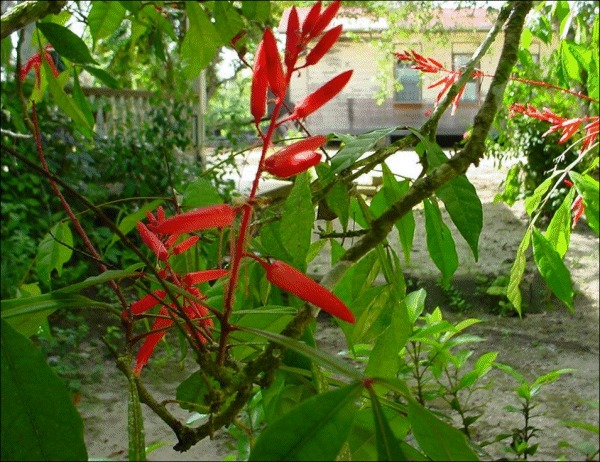
Quassia amara
Plant · Simaroubaceae
Suited to debilitated individuals with atonic digestive conditions, especially following infectious diseases such as influenza or dysentery. The picture includes prostration with hunger, inclination to yawn and stretch, and marked internal coldness suggesting a depleted, chilly constitutional type.
Key symptoms
- Atonic dyspepsia with gas, acidity, and heartburn
- Sensation as if abdomen empty and retracted to the spinal column
- Peculiar beating through abdomen extending into the extremities
- Coldness running over back with inclination to yawn and stretch
- Cold extremities with sensation of internal coldness
- Cirrhosis of liver with ascites
- Excessive desire to urinate, impossible to retain urine
Worse (aggravation)
- Deep breathing aggravates abdominal drawing sensations

Quassia-wood (QUASSIA - PICRAENA EXCELSA)
Acts on gastric organs as a tonic (Gentian; Hydr). Seems to possess marked action on eyes, producing amblyopia and cataract. Pain in right intercostal muscles above the liver. Pressure and stitches in liver, and sympathetically in spleen.
Stomach
Atonic dyspepsia, with gas and acidity. Heart-burn and gastralgia. Regurgitation of food. Abdomen feels empty and retracted. Dyspepsia after infectious diseases; especially grip, dysentery. Tongue dry or with brown sticky coating. Cirrhosis of liver with ascites.
Urinary
Excessive desire-impossible to retain urine; copious micturition day and night. As soon as the child wakes up the bed is drenched.
Extremities
Inclination to yawn and stretch (Rhus). Sensation of coldness over back. Prostration, with hunger. Cold extremities, with sensation of internal coldness (Helo-derma).
Dose
First to third potency, or spoonful doses of Aqua Quassiae.

Picræna excelsa (Jamaica) and Quassia amara, (Surinam). N. O. Simarubaceæ. Tincture or cold infusion of the wood.
Clinical
Intermittent fever. Worms.
Characteristics
The Quassia now found in the shops in the form of "Quassia chips" is the wood of Picræna, the Jamaica Quassia. The name "Quassia" was given by Linnæus to Quassia excelsa, of Surinam, from the name of a negro, Quassi or Coissi, who employed its bark as a remedy for fever. The wood of this tree was formerly employed in this country under the name of Surinam Quassia. The wood is very bitter, and yields its properties best to cold distilled water. In the old school the infusion is used as a bitter tonic in dyspepsia, and as a clyster for clearing the rectum of threadworms. There is a short homœopathic proving: J. O. Müller took a single dose of the tincture; Eidherr four doses of 30x. Lembke took the extract. The most peculiar characteristic symptoms were: Drawing in hypochondria and sensation as if abdomen were empty and retracted; with sensation …
Classical texts are in the public domain. Educational reference only — not medical advice.
