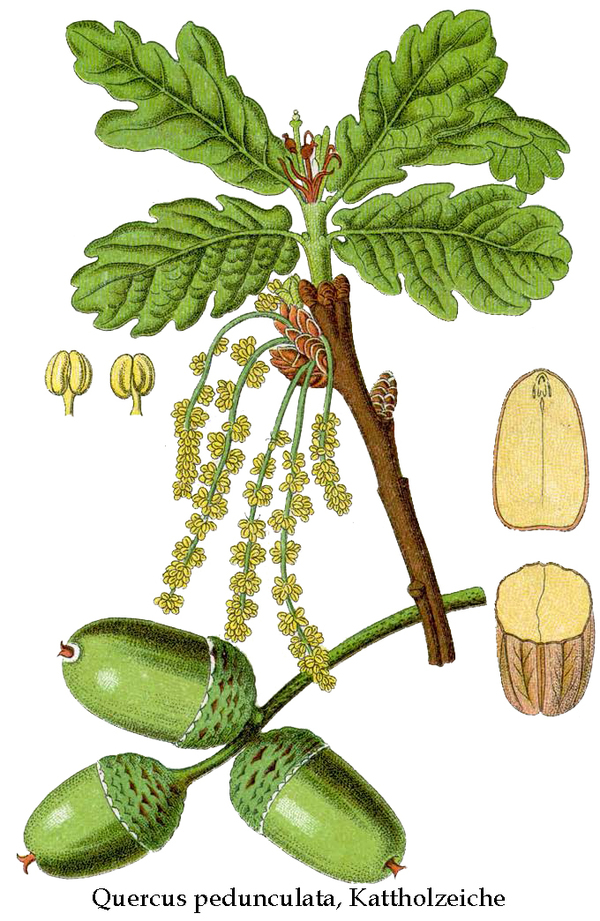
Quercus e glandibus
Quercus robur (acorns) · Oak, common oak, English oak,Quercus robur · Plant · Fagaceae
People who respond best to Quercus tend to be nervous, weepy, and unable to speak clearly or think straight.
Chronic spleen disorders involving fluid retention are primarily associated with Quercus. It is used for an enlarged spleen, possibly due to recurrent malaria or to alcoholism. Quercus may relieve the effects of acute alcohol poisoning and lessen the desire for alcohol, although it will not cure alcoholism. Recurrent gout may also be helped by the remedy.
Key symptoms
- Used first by Rademacher for chronic spleen affections; spleen-dropsy.
- Antidotes effects of Alcohol.
- Vertigo; deafness, with noises in head.
Worse (aggravation)
Better (amelioration)

Spirit distilled from Tincture of Acorn Kernels (QUERCUS GLANDIUM SPIRITUS)
Used first by Rademacher for chronic spleen affections; spleen-dropsy. Antidotes effects of Alcohol. Vertigo; deafness, with noises in head. Takes away craving for alcoholics; give dose as below for several months. Dropsy and liver affections. Useful in gout, old malarial cases with flatulence.
Relationship
Compare: Angelica (in tincture, five drops, three times daily, produces disgust for liquor; also for atony of different organs, dyspepsia, nervous headache, etc; chronic bronchitis to increase expectoration). Ceanoth; Lach; Nat mur; Helianthus (spleen enlarged and painful).
Dose
Ten drops to a teaspoonful of the distilled spirit three to four times a day. A passing diarrhœa often appears for a times a day. A passing diarrhœa often appears for a time when using it. Curative effect. Quercus acts well in trituration of the acorn 3x in splenic cases, flatulence, old malaria and alcoholic history (Clark).

Quercus robur (var. pedunculata and sessilifera). English Oak. N. O. Corylaceæ or Cupuliferæ. Tincture of acorns (peeled and crushed or shredded). Spirit distilled from the tincture (Spiritus glandium quercus). Water extract of acorns with addition of alcohol (Aqua glandium quercus.)
Clinical
Alcoholism. Breath, offensive. Constipation. Diarrhœa. Dropsy (splenic). Fistula. Giddiness. Gout. Intermitting fever. Leucocythæmia splenica. Spleen, affections of.
Characteristics
Quercus is one of Rademacher's splenic remedies. It was introduced to homœopathic practice by Burnett, who published in his Diseases of the Spleen a translation of Rademacher's account of the remedy, and how he came to learn about it. Rademacher gave the tincture of acorns to an old brandy drunkard who had long suffered from the spleen, which was at times very painful, and who was at that time "sick unto death" with ascites and dropsy of the legs. The urine at once increased, but the patient complained that each dose of the medicine caused …
Classical texts are in the public domain. Educational reference only — not medical advice.
