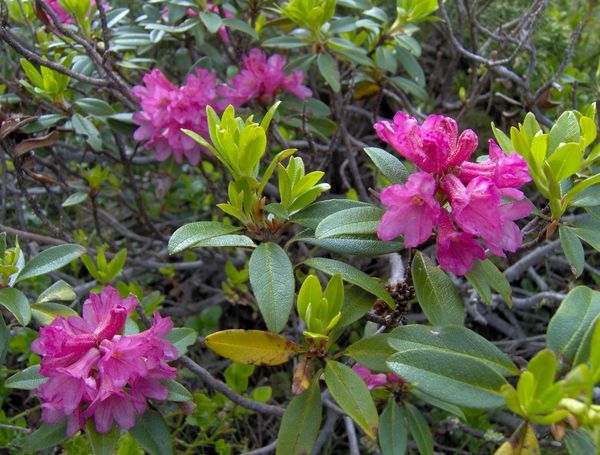
Rhododendron ferrugineum
Plant · Ericaceae
Rhododendron suits nervous, forgetful persons who are intensely sensitive to electrical and atmospheric changes, dreading storms and thunder. The typical patient has rheumatic or neuralgic complaints that come on or worsen before and during storms, in damp wet weather, or with seasonal changes in spring and autumn. Symptoms are better from warmth, wrapping up, dry heat, and motion.
Key symptoms
- All symptoms worse before a storm, in wet or rough weather, or at approach of thunder
- Violent tearing neuralgic pains in bones and periosteum, worse at rest
- Toothache in damp weather or before a storm, better while eating and from warmth
- Orchitis with bruised crushed pain in testes, worse touch, better motion
- Rheumatic tearing in all limbs especially right side, worse at rest
- Loud sounds re-echo long in the ears; intense tinnitus
- Forgetfulness — omits words while writing; sudden loss of ideas
- Cannot sleep unless legs are crossed
- Dread of storm, especially thunder
Worse (aggravation)
- Before and during a storm, thunder, and rough wet weather
- Cold, damp, windy weather and east wind
- Rest and lying still
- Night and morning in bed
- Touch (toothache, testicles, chest)
- Wine; easily intoxicated
Better (amelioration)
- After the storm breaks
- Warmth and dry heat
- Wrapping up warmly
- Eating relieves toothache and left-sided pains
- Motion and exercise
- Belching and general sweating

Snow-rose (RHODODENDRON)
Rheumatic and gouty symptoms well marked. Rheumatism in the hot season. The modality (worse before a storm) is a true guiding symptom.
Mind
Dread of a storm; particularly afraid of thunder. Forgetful.
Head
Aching in temples. Tearing pain in bones. Headache; worse, wine, wind, cold and wet weather. Pain in eyes before a storm. Ciliary neuralgia, involving eyeball, orbit, and head. Heat in eyes when using them.
Eyes
Muscular asthenopia; darting pains through eyes from head, worse before a storm.
Ears
Difficult hearing, with whizzing and ringing in ears. Hearing better in the morning; noises come on after patient has been up a few hours.
Face
Prosopalgia; violent jerking pain involving dental nerves, from temple to lower jaw and chin; better, warmth and eating. toothache in damp weather and before a storm. Swollen gums. Stumps of teeth are loosened.
Chest
Violent pleuritic pains running downward in left anterior chest. Breathless and speechless from violent pleuritic pains running down the anterior chest. Stitches in spleen from fast walking. Crampy pain under short ribs.
Male
Testicles, worse left, swollen, painful, drawn up. Orchitis; glands feel crushed. Induration and swelling of testes after gonorrhœa. Hydrocele (Sil).
Extremities
Joints swollen. Gouty inflammation of great toe-joint. Rheumatic tearing in all limbs, especially right side; worse, at rest and in stormy weather. Stiffness of neck. Pain in shoulders, arms, wrists; worse when at rest. Pains in bones in spots, and reappear by change of weather. Cannot sleep unless legs are crossed.
Modalities
Worse, before a storm. All symptoms reappear in rough weather, night, towards morning. Better, after the storm breaks, warmth, and eating.
Relationship
Compare: Ampelopsis (hydrocele and renal dropsy); Dulc; Rhus; Nat sulph.
Dose
First to sixth potency.

Pains
This is a very useful remedy in gouty patients who suffer from rheumatic pains, sometimes wandering from joint to joint, aggravated during rest, aggravated before and during storms, aggravated in cold, wet weather and ameliorated from warm wrapping.
These pains may be in the head or the limbs. It is a great palliative in old people who have suffered long from gout. Rheumatic swelling of joints. Pain in the aponevroses at night, during rest. He can always fortell a thunderstorm. There are tearing, shooting pains. Sore bruised pains. Stiffness of joints, neck and back. Extremely sensitive to cold weather, and aggravated from becoming cold. Paralytic Weakness during rest, yet be is weak from exertion.

Rhododendron chrysanthum. Siberian Rhododendron. Yellow Snow-rose. N. O. Ericaceæ. Tincture of fresh leaves.
Clinical
Amenorrhœa. Asthenopia. Bone, pains in. Bunions. Chorea. Ciliary neuralgia. Coryza. Delirium. Diarrhœa. Diphtheritic paralysis. Earache. Epistaxis. Eyes, affections of. Fever. Flatulence, incarcerated. Gums, itching of. Hydrocele. Lienteria. Lumbago. Memory, weak. Neuralgia. Nightmare. Ovary, cyst of. Rheumatism. Spleen, pain in. Sprains. Stiff-neck. Testes, affections of. Tinnitus. Toothache. Vagina, Cysts in. Wrists, pains in.
Characteristics
The golden-flowered Rhododendron is not much known in general medicine, but the Treasury of Botany says of it that "it is narcotic in its properties and is used medicinally." Growing among the fogs and storms of the Siberian mountains; its provings (by Seidel, Wahle, Herzog, Helbig, and others) show that it produces sensitiveness to storms and weather changes; and this gives the grand keynote of its use in medicine. Rhod. disturbs all parts …

Snowrose. (Ericaceae)
Nervous persons who dread a storm and are particularly afraid of thunder; < before a storm, especially an electrical storm (Nat. c., Phos., Psor., Sil.). Toothache, every spring and fall during sharp east winds; worse from change of weather, thunderstorm, windy weather. Acute inflammatory swelling of joints, wandering from one joint to another; severe at night; < in rest and during rough stormy weather (Kalm.). Rheumatic drawing, tearing pains in all the limbs, worse at rest and in wet, cold windy weather (Rhus). Cannot get sleep or remain asleep unless legs are crossed. Gout with fibrous deposit in great toe-joint, rheumatic, often mistaken for bunion (Colch., Led.). Induration and swelling of the testicle after gonorrhoea or rheumatic exposure (Clem.); orchitis, sensation in gland as if it were being crushed (Aur., Cham.).

Male Sexual Organs
Testicles, especially epididymis, intensely painful to touch, drawn up, swollen and painful.
Neck and Back
Bruised pain in the small of the back, worse at rest and in rainy weather.
Extremities
Drawing and tearing in limbs, especially the periosteum, and forearms, and legs; worse in wet weather or before a storm, and at rest.
Chill, Fever, and Sweat
Sweat, with formication.
Causes and Modalities
Complaints < during rest; before a thunder storm; in cold, wet, or windy weather.
- All symptoms worse in cold, stormy weather, and during or before a thunder-storm.
Classical texts are in the public domain. Educational reference only — not medical advice.
