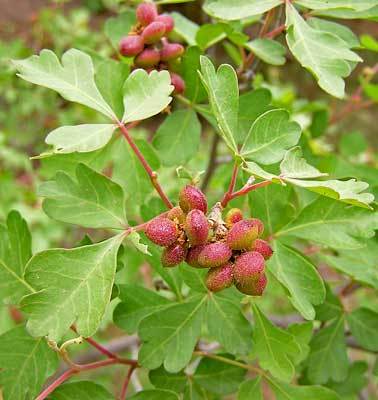
Rhus aromatica
Plant · Anacardiaceae
Rhus Aromatica is suited to debilitated, atonic individuals — especially those with relaxed conditions of the bladder, uterus, or bowel. The key picture is one of passive haemorrhage or excessive watery discharge from any mucous surface, combined with atony and weakness of the affected organ.
Key symptoms
- Diabetes with large quantities of urine of low specific gravity
- Incontinence of urine with constant dribbling due to vesical atony
- Enuresis in children during both day and night
- Severe pain at beginning or before urination causing great agony in children
- Haematuria and cystitis
- Uterine haemorrhage from atonic condition of the uterus
- Chronic diarrhoea and dysentery especially with fetid, pale, thin stools

Fragrant Sumach
Renal and urinary affections, especially diabetes. Enuresis due to vesical atony; senile incontinence. Hæmaturia and cystitis come within the range of this remedy.
Urine
Pale, albuminous. Incontinence. Severe pain at beginning or before urination, causing great agony in children. Constant dribbling. Diabetes, large quantities of urine of low specific gravity (Phos ac; Acet ac).
Dose
Tincture, in rather material doses.

R. canadensis. R. suaveolans. Betula triphylla. Lobadium aromaticum. Turpinia glabra. Fragrant Sumach. N. O. Anacardiaceæ. Tincture of fresh root bark. (Pharmacop. of Amer. Inst. says of fresh leaves.)
Clinical
Atony. Bladder, hæmorrhage from. Diabetes. Diarrhœa, chronic. Dysentery, chronic. Enuresis. Hæmorrhages. Kidneys, hæmorrhage from. Uterus, hæmorrhage from; atony of.
Characteristics
Hale quotes J. T. McClanahan's account of Rhus arom.: "It is a shrub, growing from two to six feet high, on high, rocky soil; stems straight, branching near the top; flowers yellow, fruit clustered, red, seedy, and acid. When the bush is fractured it emits a strong odour. The bark of the root is the proper medicinal part." McClanahan's grandfather, Dr. John Gray, used Rh. a. as a remedy in diabetes, and his father, Dr. F. McClanahan, in other genito-urinary diseases. J. T. McClanahan records these cases: (1) Mr. A., 27, cadaverous, emaciated, haggard, had diabetes insipidus. Rh. a., teaspoonful doses of the powdered …
Classical texts are in the public domain. Educational reference only — not medical advice.
