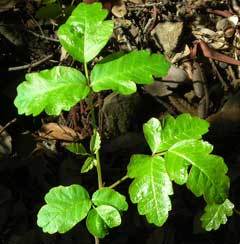
Rhus diversiloba
Toxicodendron diversilobum · Plant · Anacardiaceae
Key symptoms
- Vesicular erysipelatous rash with extreme oedema of face and swelling of neck glands
- Eruption very similar to chicken-pox
- Intense itching and burning relieved by cold, aggravated by heat and scratching
- Eyes closed by oedematous swelling
- Hypersensitivity of skin to flannel and cold air persisting after eruption subsides
- Annual recurrence of eruption without fresh exposure
Worse (aggravation)
- Heat and warmth
- Rubbing and scratching
- Hairy parts of skin more severely affected
Better (amelioration)
- Cold application relieves itching

R. diversiloba. Californian Poison Oak. N. O. Anacardiaceæ. Tincture of fresh leaves.
Clinical
Chicken-pox. Eczema. Erysipelas. Skin, sensitive.
Characteristics
Murray Moore observed the effect of Rh. d. on three persons: (1) Miss M., 25, of brown hair and fair complexion, walked up a hill one warm morning, and whilst perspiring gathered ferns which grew among the Rh. d. trees, the leaves of which she must have touched, though she did not pull any. The result was a very severe poisoning, which provided the majority of the symptoms of the Schema. (2) J. W., light-haired, robust Englishman, 23, lay down whilst sweating among the bushes and was smartly poisoned. Ver. v. Ø internally and a lotion of Magnesia sulph. externally checked the spread of the disease. (3) Boy, 10, pure blond type with thin, freckled skin, plucked some of the leaves, and in eighteen hours the poisoning symptoms came on, facial esysipelas with extreme œdema, closing both eyes, itching and burning. The symptoms became general. M. …
Classical texts are in the public domain. Educational reference only — not medical advice.
