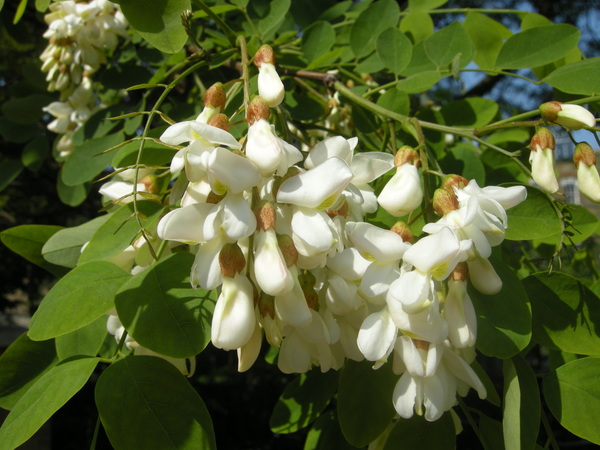
Robinia pseudacacia
Plant · Fabaceae
Robinia is suited to individuals suffering from excessive gastric acidity where albuminoid digestion is too rapid and starch digestion is perverted. The constitutional picture includes intensely acrid eructations, sour vomiting, and great distention of stomach and bowels with incarcerated flatulence. It is particularly indicated in children with sourness and in women with nymphomania, acrid leucorrhoea, and intermenstrual bleeding.
Key symptoms
- Hyperchlorhydria; pronounced acidity of the stomach
- Intensely acrid eructations
- Acrid and greenish vomiting with colic and flatulence
- Frontal headache accompanying gastric acidity
- Nightly burning pains in stomach with constipation and urgent desire
- Stools and perspiration sour; child smells sour
- Acidity of children; dull heavy aching in stomach
- Gastric headache with acid vomiting worse from motion and reading
Worse (aggravation)
- Motion
- Reading
- At night (burning stomach pains)

Yellow Locust (ROBINIA)
The remedy for hperchlorhydria. In cases where albuminoid digestion is too rapid and starch digestion is perverted. The gastric symptoms with the most pronounced acidity are well authenticated, and are the guiding symptoms. The acidity of Robinia is accompanied by frontal headache. Intensely acrid eructations. Acrid and greenish vomiting, colic and flatulence, nightly burning pains in stomach and constipation with urgent desire.--Acidity of children. Stools and perspiration sour. Incarcerated flatus.
Head
Dull, throbbing, frontal pain; worse, motion and reading. Gastric headache with acid vomiting.
Stomach
Dull, heavy aching. Nausea; sour, eructations; profuse vomiting of an intensely sour fluid (Sulph ac). Great distention of stomach and bowels. Flatulent colic (Cham; Diosc). Sour stools; child smells sour.
Female
Nymphomania. Acrid, fetid leucorrhœa. Discharge of blood between menstrual periods. Herpes on vagina and vulva.
Relationship
Magnes phos; Arg nit; Orexine tannate. (Hyperchlorhydria; deficient acid and slow digestion; 14 hourly doses)
Dose
Third potency. Must be continued a long time.

Robinia pseud-acacia. Common or False Acacia. North American Locust. N. O. Leguminosæ. Tincture of fresh root bark. Tincture of fresh bark of young twigs. Trituration of the beans.
Clinical
Acidity. Coryza. Dyspepsia. Flatulence. Headache, gastric. Hyperchlorhydria. Indigestion, nocturnal. Intermittents. Neuralgia. Pyrosis. Stomach, affections of. Urticaria.
Characteristics
The roots of Robinia (says Treas. of Bot.) "have the taste and smell of liquorice, but are a dangerous poison, and accidents have occurred from their being mistaken for liquorice roots." The poisonings that have been recorded have been due to eating the beans or chewing the bark. Of thirty-two boys so poisoned (H. R., iv. 72) in the mildest cases there occurred─Vomiting of ropy mucus, dilatation of pupils, dry throat, flushed face. In the severest the vomit was more copious and mixed with blood; with retching, epigastric pains, debility, stupor, cold extremities, dusky pallor, heart's action feeble, intermittent, extremities pulseless. …

Phatak's chapter on Robinia pseudacacia is available in the app.
Read Phatak in the appClassical texts are in the public domain. Educational reference only — not medical advice.
