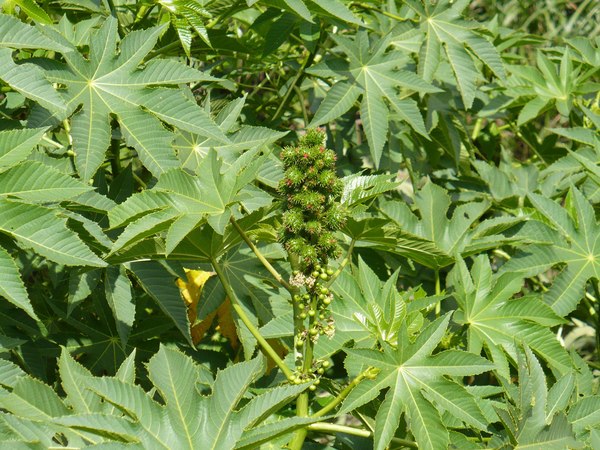
Ricinus communis
Castor oil plant, Palma Christi, castor bean. · Plant · Euphorbiaceae
The digestive system is the primary focus of this remedy. Typical symptoms treated include nausea, profuse vomiting, and diarrhea: Ricinus is useful for children who are seriously prostrated by diarrhea. Typically, there is severe dehydration and great thirst, but no desire to eat.
Key symptoms
- Has marked action on gastro-intestinal tract.
- Increase the quantity of milk in nursing women.
- Vomiting and purging.
- Vertigo, occipital pain, congestive symptoms, buzzing in ears.
- Face pale, twitching of mouth.
- Anorexia with great thirst, burning in stomach, pyrosis, nausea profuse vomiting, pit of stomach sensitive.
- Rumbling with contraction of recti muscles, colic, incessant diarrhœa with purging.
- Rice water stools with cramps and chilliness.
Worse (aggravation)
Better (amelioration)

Castor-oil (RICINUS COMMUNIS - BOFAREIRA)
Has marked action on gastro-intestinal tract. Increase the quantity of milk in nursing women. Vomiting and purging. Languor and weakness.
Head
Vertigo, occipital pain, congestive symptoms, buzzing in ears. Face pale, twitching of mouth.
Stomach
Anorexia with great thirst, burning in stomach, pyrosis, nausea profuse vomiting, pit of stomach sensitive. Mouth dry.
Abdomen
Rumbling with contraction of recti muscles, colic, incessant diarrhœa with purging. Rice water stools with cramps and chilliness.
Stool
Loose, incessant, painless, with painful cramps in muscles of extremities. Anus inflamed. Stools green, slimy, and bloody. Fever, emaciation, somnolence.
Relationship
Compare: Resorcin (summer complaint with vomiting); destroys organic germs of putrefaction; Cholos terrapina (cramps of muscles). Ars; Verat.
Dose
Third potency. Five drops every four hours for increasing flow of milk; also locally a poultice of the leaves.

Ricinus communis. Palma Christi. N. O. Euphorbiaceæ. Tincture (made with hot alcohol and water) or trituration of fresh seeds. Tincture of fresh plant.
Clinical
Albuminuria. Aphthæ. Cholera. Cholera infantum. Diarrhœa. Duodenum, catarrh of. Dysentery. Eruptions. Gangrene. Gastro-enteritis. Jaundice. Lactation. Peritonitis.
Characteristics
The castor-oil plant is a native of India. In the tropics it is a small tree growing to the height of eight or ten feet. Under the name of Palma Christi it is cultivated as an annual in this country, its stems reaching from three to five feet. The oil of medicine is obtained from the seeds. The blandest which is in common use is "cold drawn," i.e., expressed without the aid of heat, and contains the smallest amount of the acrid principle. A decoction of the seeds, which is used in the East and West Indies, contains a much larger proportion. The homœopathic preparation should be made in such a way as to secure the full properties. The leaves have an especially powerful action …
Classical texts are in the public domain. Educational reference only — not medical advice.
