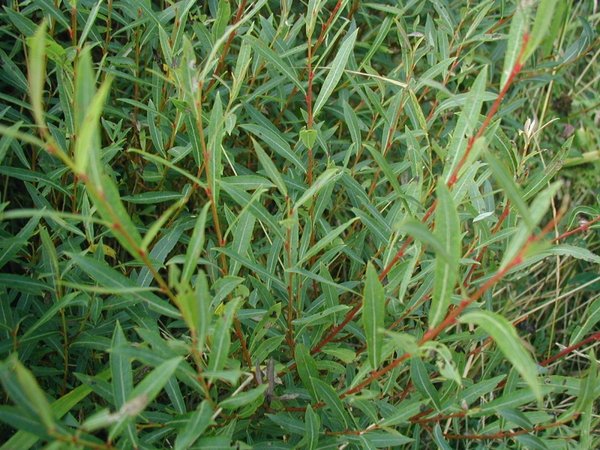
Salix purpurea
Plant · Salicaceae
Salix purpurea produces a picture dominated by vertigo, parotid swelling, loose stools, and a characteristic fever where heat precedes chill. The mental state features nervousness, irritability, despondency, and dullness of intellect. The remedy was established through proving by T. C. Duncan and his wife with drachm doses of the bark infusion.
Key symptoms
- Giddiness commencing just in front of ears passing up to vertex like a wave
- Swelling of right parotid gland
- Loose stools with griping; two stools in one day
- Fever with heat preceding chill and perspiration
- Peculiar astringent taste puckering mucous membrane and closing Steno's duct
- Very nervous, irritable, and despondent all day; dullness of intellect
- Flatulence and pain in abdomen

Salix purpurea. Red or Purple Willow. N. O. Salicaceæ. Tincture or infusion of fresh bark.
Clinical
Diarrhœa. Fever. Parotitis. Vertigo.
Characteristics
T. C. Duncan and his wife proved Sal. purp., taking drachm doses of the infusion of the bark. The chief symptoms produced were: Giddiness; loose stools; fever; swelling of the right parotid gland. The fever was marked by heat preceding chill and perspiration. Duncan chewed the bark on one occasion, and this caused the astringent effect on the mucous membrane of the mouth. The only rheumatic symptom was aching in right acetabulum.
1. Mind
Very nervous, irritable, and despondent all day.─Dulness of intellect.
Classical texts are in the public domain. Educational reference only — not medical advice.
