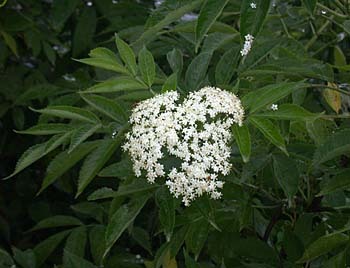
Sambucus canadensis
Sambucus nigra subsp. canadensis · Plant · Adoxaceae
Sambucus canadensis is closely allied to Sambucus nigra in action, sharing severe chest symptoms and blotched face. The remedy suits individuals with depression, undefined dread, and dry larynx impeding respiration. Clinical indications include albuminuria, asthma, angina pectoris, and lumbago.
Key symptoms
- Severe chest symptoms with face flushed and broken out in blotches
- Depression and dread of undefined danger
- Head heavy with drawing and darting pains; sensation of water undulating on motion
- Pharynx and larynx dry and swollen, impeding free respiration
- Mouth parched and dry with desire for drink
- Albuminuria and lumbago
- Angina pectoris and asthma
Worse (aggravation)
- Lying down
Better (amelioration)
- Getting out of bed
- Sweating

Sambucus canadensis. S. humilis. S. glauca. S. nigra (Marsh). Elder-bush. N. O. Caprifoliaceæ. Tincture of buds, flowers, tender shoots, and leaves.
Clinical
Albuminuria. Angina pectoris. Asthma. Blotches. Larynx, dry. Lumbago.
Characteristics
The indigenous North American Elder grows in rich alluvial soils, flowers in July, and fruits in September. The species, says Millspaugh, is not sufficiently distinct from the European Elder (Samb. nigra, Linn.), differing only "in being less woody, and having more loose cymes, larger flowers, and more compound leaves." It has, however, been proved separately by A. Uebelacker, whose symptoms are given in the Schema. The severe chest symptoms and blotched face recall symptoms of Samb. nig., with which it is probably identical in action. The chief Conditions were: < Lying down. > Getting out of bed. > By sweat.
Classical texts are in the public domain. Educational reference only — not medical advice.
