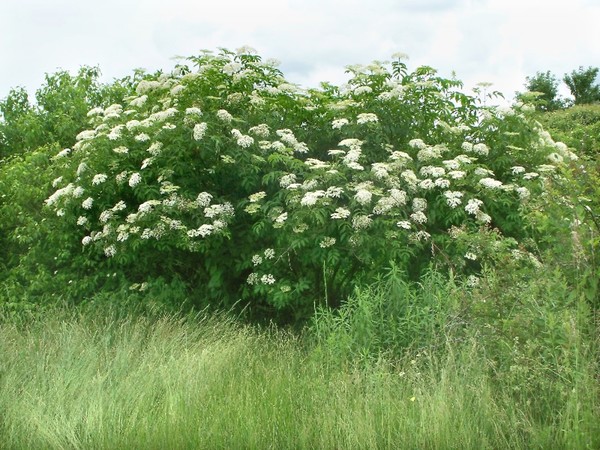
Sambucus nigra
European elder, black elder. · Plant · Adoxaceae
The remedy is best suited to people who are constantly fretful, restless, easily frightened, and prone to trembling. Sambucus is used mainly for respiratory problems. General symptoms associated with the remedy include severe weakness, and profuse continuous or intermittent sweating. The remedy may help respiratory conditions such as asthma, croup, whooping cough, or bronchitis, particularly when they occur on waking. Generally, there is hoarseness, with mucus and inflammation in the larynx but no desire to drink. During asthma attacks, a lack of oxygen may cause the face to turn blue.
Key symptoms
- Dry coryza of infants; snuffles with blocked nose
- Child awakes suddenly nearly suffocating, sits up, turns blue
- Suffocative cough coming on about midnight with crying and dyspnea
- Profuse sweating while sleeping; dreads uncovering
- Dry heat while sleeping; profuse sweat on waking
- Oedematous swellings in legs and feet; icy cold extremities
- Infant must let go nipple; cannot breathe through blocked nose
- Fright followed by suffocative attacks; constant fretfulness
- Spasmodic croup; sniffles of infants
Worse (aggravation)
Better (amelioration)

Elder
Acts especially on the respiratory organs. Dry coryza of infants, snuffles, œdematous swellings. Profuse sweat accompanies many affections.
Mind
Sees images when shutting eyes. Constant fretfulness. Very easily frightened. Fright followed by suffocative attacks.
Face
Turns blue with cough. Red, burning spots on cheeks. Heat and perspiration of face.
Abdomen
Colic, with nausea and flatulence; frequent watery, slimy stools.
Urine
Profuse urine with dry heat of skin. Frequent micturition, with scanty urine. Acute nephritis; dropsical symptoms, with vomiting.
Respiratory
Chest oppressed with pressure in stomach, and nausea Hoarseness with tenacious mucus in larynx. Paroxysmal, suffocative cough, coming on about midnight, with crying and dyspnœa. Spasmodic croup. Dry coryza. Sniffles of infants; nose dry and obstructed. Loose choking cough. When nursing child must let go of nipple, nose blocked up, cannot breathe. Child awakes suddenly, nearly suffocating, sits up, turns blue. Cannot expire (Meph). Millar's asthma.
Extremities
Hands turn blue. Œdematous swelling in legs, insteps, and feet. Feet icy cold. Debilitating night-sweats (Salvia; Acet ac).
Fever
Dry heat while sleeping. Dreads uncovering. Profuse sweat over entire body during waking hours. Dry, deep cough precedes the fever paroxysm.
Skin
Dry heat of skin during sleep. Bloated and swollen; general dropsy; profuse sweat on waking.
Modalities
Worse, sleep, during rest, after eating fruit. Better, sitting up in bed, motion.
Relationship
Compare: Ipec; Meph; Opium; Sambucus Canadensis (great value in dropsies; large doses required-fluid extract, 1/4 to 1 teaspoonful three times daily).
Antidotes: Ars; Camph.
Dose
Tincture, to sixth potency.

Sambucus nigra (Linn.). Elder. N. O. Caprifoliaceæ. Tincture of fresh leaves and flowers.
Clinical
Angina pectoris. Asthma. Chest, oppression of. Coryza, dry. Cough. Croup. Emaciation. Headaches, catarrhal. Hoarseness. Hydrocele. Ileus. Laryngismus. Perspirations. Phthisis. Scurf. "Snuffles." Starting. Whooping-cough.
Characteristics
The leaves of Samb. n. have an unpleasant odour when bruised, which is supposed to be offensive to most insects, and a decoction of them is sometimes used by gardeners to keep off caterpillars from delicate plants. By village herbalists the inner bark as well as the leaves are employed for making an ointment, and the flowers serve for fomentations, or are made into a medicinal tea; while the berries are the principal ingredient in Elderberry wine (Treas. of Bot.). If sheep that have the rot can get at the bark and young leaves they will soon cure themselves (Green). Millspaugh says of Samb. canad. that a decoction or ointment of the flowers and leaves was used as an …

Elder. (Caprifoliaceae.)
Adapted to diseases of scrofulous children, which affect the air passages specially. Persons formerly robust and fleshy, suddenly become emaciated (Iod., Tub.). Bad effects of violent mental emotions; anxiety, grief, or excessive sexual indulgence (Phos. ac., Kali p.). Oedmatous swelling in various parts of the body, especially in legs, instep and feet. Dry coryza of infants (sniffles); nose dry and completely obstructed, preventing breathing and nursing (Am. c., Nux). Dyspnoea: child awakens suddenly nearly suffocated, face livid, blue, sits up in bed; turns blue, gasps for breath, which it finally gets; attack passes off but is again repeated; child inspires but cannot expire (Chlorine, Meph.); sleeps into the attack (Lach.). Compare: Aurum drac. in Miller's asthma. Attacks of suffocation as in last stage of croup. Cough: suffocative, with crying children; worse about midnight; hollow, deep whooping, with spasm of chest; with regular inhalations but sighing exhalations. Cough deep, …

Nose
Nose perfectly dry and stuffed up; child has difficulty in breathing; snuffles.
Respiratory Organs
Attacks of suffocative cough in children coming on about midnight; with crying, dyspnoea; hands and face turn blue.
Chill, Fever, and Sweat
Profuse sweat while awake; dries off during sleep.
- Suffocative attacks after midnight, the child wakens suddenly, sits up in bed, turns blue and gasps for breath.

Phatak's chapter on Sambucus nigra is available in the app.
Read Phatak in the appClassical texts are in the public domain. Educational reference only — not medical advice.
