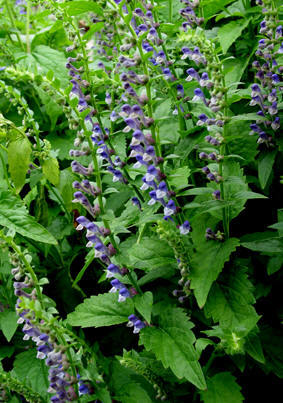
Scutellaria laterifolia
Scutellaria lateriflora · Virginia skullcap. · Plant · Lamiaceae
Scutellaria is best suited to people who have a sense of foreboding and feel exhausted, confused, and unable to concentrate.
The typical symptom picture is of nervous exhaustion, possibly as a result of illness, continuous, tiring work, or over-studying. The remedy may help chronic fatigue syndrome, headaches with a sensation of the space in the head being too small for its contents, possible dizziness, twitching muscles, and sensitivity to light.
Key symptoms
- Nervous sedative with cardiac irritability and chorea
- Twitchings of muscles; must keep moving
- Fear of some calamity; inability to fix attention
- Dull frontal headache; migraine worse over right eye
- Night terrors; sleeplessness; frightful dreams
- Nervous weakness after influenza
- Explosive headaches with frequent urination in school teachers
- Nervous spasms in children during dentition
Worse (aggravation)
Better (amelioration)

Skullcap
This is a nervous sedative, where nervous fear predominates. Cardiac irritability. Chorea. Nervous irritation and spasms of children, during dentition. Twitching of muscles. Nervous weakness after influenza.
Mental
Fear of some calamity. Inability to fix attention (Aethus). Confusion.
Head
Dull, frontal headache. Eyes feel pressed outwards. Flushed face. Restless sleep and frightful dreams. Must move about. Night terrors. Migraine; worse, over right eye; aching in eyeballs. Explosive headaches of school teachers with frequent urination; headaches in front and base of brain. Nervous sick headaches, worse noise, odor light, better night; rest, 5 drops of tincture.
Stomach
Nausea; sour eructations; hiccough; pain and distress.
Abdomen
Gas, fullness and distention, colicky pain and uneasiness. Light colored diarrhœa.
Male
Seminal emissions and impotency, with fear of never being better.
Sleep
Night-terrors; sleeplessness; sudden wakefulness; frightful dreams.
Extremities
Twitchings of muscles; must be moving. Chorea. Tremors. Sharp stinging pains in upper extremities. Nightly restlessness. Weakness and aching.
Relationship
Compare: Cyprip; Lycopus.
Dose
Tincture and lower potencies.

Scutellaria laterifolia. Mad-dog Skull-cap. N. O. Labiatæ. Tincture of fresh plant.
Clinical
Ardor urinæ. Brain, irritation of. Chorea. Delirium tremens. Dentition. Exophthalmos. Flatulence. Headache, nervous. Hiccough. Hydrophobia. Hysteria. Night-terrors. Sleeplessness. Tobacco-heart.
Characteristics
Scutel., says Hale, who introduced it into homœopathy, is in the domestic practice of North America what Valerian is in that of Europe. "Its calming effects on the nervous system have been known ever since the settlement of New England." Provings by G. W. Gordon (Allen) and G. H. Royal (New, Old, and Forgotten Remedies) give the homœopathic data. Royal (A. H., xxiii. 269) had this indication for Scut. given him by a friend: "Nervo-bilious headache with the nervous symptoms uppermost, and nothing the matter with her." He relates this case: Miss M., 32, head of a large school, complained of being used up; unable to sleep or think. Pain in head almost constant, sometimes frontal, mostly at base of …
Classical texts are in the public domain. Educational reference only — not medical advice.
