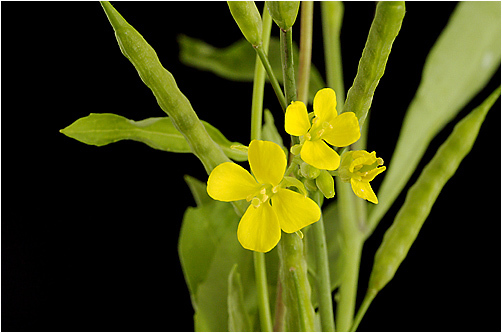
Sinapis nigra
Brassica nigra · Black mustard, Brassica nigra · Plant · Brassicaceae
Sinapis is given mainly to people who are irritable and become irritated for no reason. They have poor concentration, although studying and mental exercise make them feel better and focus their minds.
Classic conditions linked with Sinapis are hay fever, colds, and pharyngitis, with hot, dry mucous membranes. Further characteristic symptoms include sweat that forms on the upper lip and forehead, catarrh or mucus that feels cold, intense sneezing that is worse at night, and a feeling as if the blood vessels are filled with hot water. Colds tend to affect the left nostril in particular.
Key symptoms
- Dryness of nares and pharynx with thick lumpy secretion
- Stoppage of left nostril all day or in afternoon and evening
- Nostrils alternately stopped; dry, hot, with lachrymation and sneezing
- Hay-fever and coryza with acrid discharge
- Burning in stomach extending up esophagus, throat, and mouth
- Hot sour eructations; colic better sitting up straight
- Cough relieved by lying down; asthmatic breathing
- Rheumatic pain in intercostal and lumbar muscles
Worse (aggravation)
Better (amelioration)

Black Mustard (BRASSICA NIGRA)
Is of use in hay-fever, coryza, and pharyngitis. Dry nares and pharynx, with thick, lumpy secretion. Small-pox.
Head
Scalp hot and itches. Sweat on upper lip and forehead. Tongue feels blistered.
Nose
Mucus from posterior nares feels cold. Scanty, acrid discharge. Stoppage of left nostril all day, or in afternoon and evening. Dry, hot, with lachrymation, sneezing; hacking cough; better lying down. Nostrils alternately stopped. Dryness of anterior nares.
Respiratory
Cough is relieved by lying down.
Throat
Feels scalded, hot inflamed. Asthmatic breathing. Loud coughing-spells with barking expiration.
Stomach
Offensive breath, smelling like onions (Asaf; Armorac). Burning in stomach, extending up œsophagus, throat, and mouth, which is full of canker sores. Hot sour eructations. Colic; pains come on while bent forward; better, sitting up straight. Sweat better when nausea comes on.
Urinary
Pain in bladder, frequent copious flow day and night.
Back
Rheumatic pain in intercostal and lumbar muscles; sleeplessness from pain in back and hips.
Relationship
Compare: Sulph; Capsic; Colocy; Sinapis alba-White Mustard--(throat symptoms marked, especially pressure and burning, with obstruction in œsophagus; sensation of a lump in œsophagus behind the Manubrium Sterni and with much eructation; similar symptoms in rectum). Mustard oil by inhalation (acts on the sensory nerve endings of the trigeminal. Relieves pain in middle ear disease and in painful conditions of nose, nasal cavities, and tonsils).
Dose
Third potency.

Brassica nigra, Black Mustard. N. O. Cruciferæ. Trituration and tincture of seeds.
Clinical
Amenorrhœa. Apoplexy. Asthma, pituitous. Catarrh. Chlorosis. Chordee. Chorea. Constipation. Coryza. Cough. Diarrhœa. Hæmorrhoids. Hay-fever. Headache, dull, heavy. Heartburn. Hiccough. Intermittents. Menses, premature. Mucous fever. Post-nasal catarrh. Priapism. Scurvy. Variola.
Characteristics
"Sin. nig. yields the greater part of the condiment so generally used in this country. The plant is indigenous, but is nevertheless largely cultivated in Yorkshire and Durham. The seeds are of a reddish-brown colour. Mixed with those of Sin. a. they are crushed between rollers, and subsequently powdered and sifted twice or oftener. From the residue left on the sieve a fixed oil is obtained by pressure. The powdered mustard is usually mixed with a considerably quantity of wheaten flour and a small quantity of turmeric powder. The term I flour of mustard I is not quite accurate, as the mustard seeds themselves contain little or …
Classical texts are in the public domain. Educational reference only — not medical advice.
