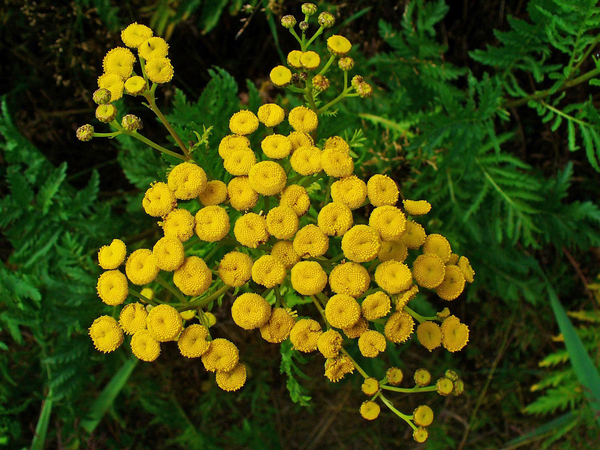
Tanacetum vulgare
Plant · Asteraceae
Tanacetum Vulgare is indicated for individuals with profound nervous exhaustion, a "half alive" lassitude, and a tendency to spasms or chorea, often associated with worm infestations. It especially suits women with menstrual disorders — suppressed or painful menses — and those with convulsive or epileptiform conditions. The patient is irritable, mentally fatigued, and sensitive to noise.
Key symptoms
- Abnormal lassitude; half dead, half alive feeling throughout body
- Chorea and reflex spasms from worms
- Convulsions with frothing at mouth and clenched hands
- Dysmenorrhea with bearing-down pains and drawing in groins
- Suppressed menses followed by profuse flow
- Irritable, sensitive to noise, mind fatigued from least exertion
- Dull heavy headache worse from least exertion
- Sudden sensation as if ears close up
- Nausea and vertigo worse in closed room
Worse (aggravation)
- At night, especially after midnight and at 4 a.m.
- In a closed room
- From mental or physical exertion
Better (amelioration)
- In open air
- After stool (abdominal pain)

Tansy
Abnormal lassitude. Nervous and tired feeling. "Half dead, half alive feeling" all over. Of use in chorea and reflex spasms (worms). Said to be a specific against effects of poison ivy.
Head
Heavy, dull, confused. Headache with least exertion.
Mental
Irritable, sensitive to noise. Mental fatigue, nausea and vertigo, worse in a closed room.
Ears
Roaring and ringing; voice sounds strange; ears seem to close up suddenly.
Abdomen
Pain in bowels; relieved by stool. Desire for stool immediately after eating. Dysentery.
Female
Dysmenorrhœa, with bearing-down pains, tenderness, drawing in groins. Menses suppressed; later, profuse.
Respiratory
Hurried, labored, stertorous respiration. Frothy mucus obstructs the air-passages.
Relationship
Compare: Cimicif; Cina; Absinth. Nux follows well.
Dose
Tincture, to third potency.

Tanacetum vulgare. Tansy. N. O. Compositæ. Tincture of the fresh plant in flower. Attenuations of the oil.
Clinical
Abortion. Amenorrhœa. Chorea. Dysmenorrhœa. Epilepsy. Eyes, sclerotica inflamed. Hydrophobia. Labia, abscess of. Paralysis. Strabismus (right inward). Worms.
Characteristics
The common Tansy (the word is derived from αθανασια, immortality), with its deep-yellow button-like flowers, a close companion of the Rag-wort (Senecio Jacobea) on our commons and in our hedgerows, takes a not unimportant part in giving colour to the landscape. In olden times puddings were made containing Tansy leaves, and these puddings were called "tansies" also. "In the springtime are made with the leaves hereof newly sprung up, and with eggs, cakes or tansies, which be pleasant in taste and good for the stomach. For if any bad humours cleave thereunto, it doth perfectly concoct them and scour them downwards" (Gerarde). Gerarde also says that the seeds kill and expel worms of every sort; the root is good in gout; and …
Classical texts are in the public domain. Educational reference only — not medical advice.
