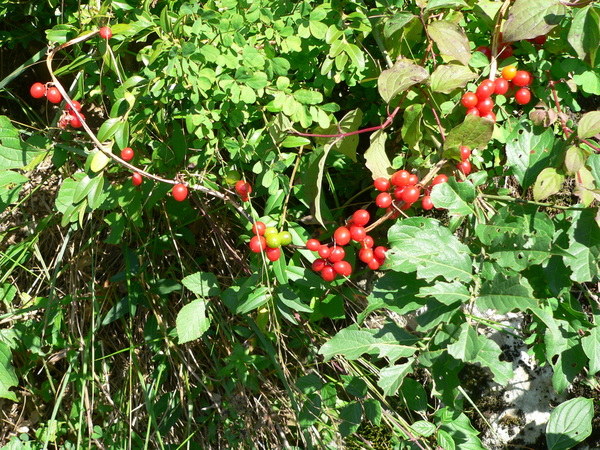
Tamus
Dioscorea communis (Tamus communis) · Plant · Dioscoreaceae
Key symptoms
- Chilblains, itching and inflamed
- Bruises and black-and-blue marks from injury
- Dissolves congealed blood under the skin
- Removes scars and skin deformities

Tamus communis. Black Bryony. Ladies' Seal. N. O. Dioscoreaceæ. Tincture of fresh root. Tincture of the berries.
Clinical
Chilblains.
Characteristics
Tamus is the only European representative of the Dioscoreaceæ. There are two species, T. communis and T. cretica. The Greeks use the young suckers of both like asparagus, which they much resemble. T. communis is the Black Bryony of our hedges. "The root is very great and thick, oftentimes as big as a man's leg, blackish without and very clammy or slimy within; which having been scraped with a knife, it seems to be a matter fit to be spread upon cloth or leather in manner of a plaister of sear-cloth" (Gerarde). Dioscorides, according to the same authority, says the fruit or berries take away sun-burns and other blemishes of the skin; and Gerarde adds that these "very quickly waste and consume away black and blue marks that come of bruises and dry beatings: which thing also the roots perform being laid upon them." The fruits steeped in gin are a popular …
Classical texts are in the public domain. Educational reference only — not medical advice.
