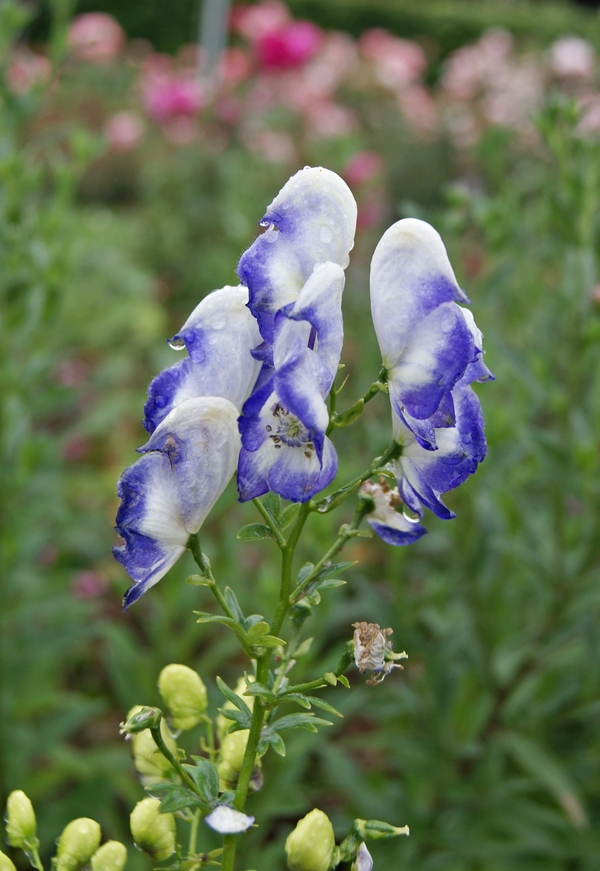
Aconitum cammarum
Plant · Ranunculaceae
Aconitum cammarum suits individuals with pronounced neurological hypersensitivity expressed as formication and distortion of sensory perception, beginning in the face and mouth and spreading throughout the body. There is significant light sensitivity, impaired memory, and spasmodic digestive disturbance.
Key symptoms
- Formication beginning on tongue and lips, spreading to face and whole body
- Headache worse by bending the body forward
- Faceache with tinnitus and vertigo
- Violent eructations; spasmodic contraction of stomach and abdominal muscles
- Inclination to vomit without actual vomiting
- Painful papules and vesicles with serous fluid on lower extremities
- Memory weakened; sense of touch diminished
- Erections and pollutions without voluptuous dreams
Worse (aggravation)
- Bending body forward (headache)
- Walking causes weariness and joint pains in elbows, knees, hips
- Mental exertion

A. cammarum, Linn. (includes A. neomontanum, Willd.; A. intermedium, D. C., and A. stoerckianum, Reich.). N. O. Ranunculaceæ. Tincture of root.
Clinical
Catalepsy. Eruption. Headache. Neuralgia. Pollutions. Salivation. Tongue, paralysis of. Vomiting.
Characteristics
The main symptoms, of Aconitine are reproduced in A. camm. Formication begins on tongue and lips and spreads to face and thence over whole body; with this are distortion of features and dry skin. There is headache < by bending body forward; and faceache accompanied by tinnitus aurium and vertigo. Walking causes weariness and, if continued, causes pains in elbows, knees, and hips. Violent eructations; inclination to vomit without vomiting; spasmodic contraction of stomach and abdominal muscles. Great sensitiveness to light. Erections and pollutions without voluptuous dreams. On lower extremities small papules and vesicles, filled with serous fluid, very painful. Memory weakened; sense of touch diminished.
Classical texts are in the public domain. Educational reference only — not medical advice.
