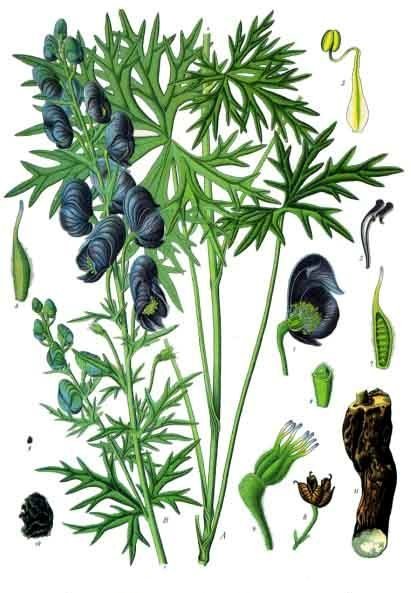
Aconitum ferox
Plant · Ranunculaceae
Aconitum ferox suits states of intense anxiety with acute respiratory crisis where the patient must remain upright to breathe and experiences overwhelming fear of suffocation. Initial heightened mental activity and rapid thought is followed by profound depression when symptoms intensify.
Key symptoms
- Burning pains of greater intensity than ordinary Aconite
- Anxiety and fear of suffocation from respiratory muscle paralysis
- Obliged to breathe half-sitting up, head resting on palms
- Cheyne-Stokes breathing; severe dyspnea
- More intense mental activity followed by greater depression
- Unendurability of suffering characteristic of the Aconite group
- Gastralgia and numbness
Worse (aggravation)
- Warm food
- Lying down
Better (amelioration)
- Cold drinks
- Sitting up
- Coffee

A. ferox, Wall. A. virosum, Don. Bisch, or Bikh, Ativisha. (The most poisonous species known, containing greatest proportion of Aconitine; from the Himalaya Mountains.) N. O. Ranunculaceæ. Tincture of root.
Clinical
Burning pains. Cheyne-Stokes breathing. Chill. Dyspnœa. Gastralgia. Neuralgia. Numbness.
Characteristics
A. ferox was proved by Dworzack, who also proved Aconitine. The Ferox developed burning pains in greater intensity than the alkaloid; more intense mental activity followed by greater depression. The Aconite note of unendurability of suffering was marked. Anxiety and fear of suffocation from paralysis of respiratory muscles; obliged to breathe half-sitting up with head resting on palms of hands. Cold drinks >; sitting up >; warm food <; coffee >.
Classical texts are in the public domain. Educational reference only — not medical advice.
