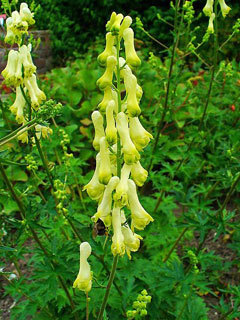
Aconitum lycoctonum
Plant · Ranunculaceae
Aconitum lycoctonum is suited to scrofulous constitutions with marked lymphatic gland enlargement, particularly cervical, axillary, and mammary glands. Unlike other Aconites, cutaneous nerve symptoms are absent; instead there is a pronounced tendency to glandular swelling and digestive disturbance especially after eating pork or onions.
Key symptoms
- Swelling of cervical, axillary, and mammary glands
- Scrofulous and enlarged glands; useful in Hodgkin's disease
- Diarrhea after eating pork
- Itching of eyes, nose, anus, and vulva
- Cracked skin of the nose
- Cough leaving a taste of blood in the mouth
- Absence of cutaneous nerve affections found in other Aconites
Worse (aggravation)
- Afternoon
- Mental exertion
- During digestion, especially after pork, onions, and wine

A. lycoctonum, Linn. A. telyphonum, Reich. Wolfsbane. N. O. Ranunculaceæ. Tincture of fresh plant when coming into bloom. (The only aconite which does not contain Aconitine.)
Clinical
Breasts, inflammation of. Constipation. Diarrhœa. Glands, enlargement of. Hodgkin's disease. Liver, disorders of. Pork, effects of. Strangury.
Characteristics
The symptoms of A. lycoct., whilst resembling those of the other aconites in some respects, show a marked absence of the cutaneous-nerve affections so prominent in their provings. The most notable symptoms are swelling of the cervical, axillary, and mammary glands. I have used it with good effect in cases of scrofulous glands, and even where Hodgkin's disease has been suspected. Diarrhœa after eating pork. Itching is prominent in the proving: of eyes, nose, anus, vulva. The skin of the nose is cracked. There is a cough leaving a taste of blood in the mouth. The symptoms are < in afternoon (like Lycop.); < from mental exertion; < during digestion, especially of pork, onions, and after wine.
Classical texts are in the public domain. Educational reference only — not medical advice.
