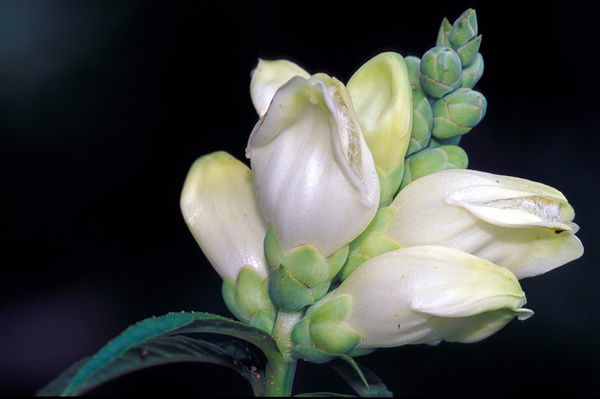
Chelone glabra
Plant · Plantaginaceae
Chelone glabra suits debilitated persons with liver affections, especially involving the left lobe, and those suffering from worm infestations or the sequelae of malaria. It acts on a line between the hilus of the liver and the fundus of the uterus.
Key symptoms
- Pain or soreness of the left lobe of the liver extending downwards
- Round and thread worms; acts as a vermifuge against all worms
- Dumb ague with ill-defined paroxysms of aching and fever after malaria
- Soreness of external parts as if skin were off, especially about elbow
- Jaundice with dyspepsia and hepatic torpor
- Debility from loss of tone of digestive organs or liver
- Malaise following intermittent fevers

Snakehead (CHELONE)
A remedy in liver affections with pain or soreness of the left lobe of the liver and extending downwards. Dumb ague. Soreness of external parts, as if skin were off; debility. Malaise, following intermittents. Dyspepsia with hepatic torpor. Jaundice. Round and thread worms. It is an enemy to every kind of worm infesting the human body.
Dose
Tincture, in one to five drop doses.

Chelone glabra. Balmony. Snake-head or Turtle-head. N. O. Scrofulariaceæ.
Clinical
Debility. Dumb-ague. Jaundice. Liver, diseases of. Quinine cachexia. Worms.
Characteristics
Chelone has been used by old-school practitioners and eclectics as a cholagogue and vermifuge. Burnett has used it as an organ-remedy in liver affections. His indication is "pain or soreness of the left lobe of the liver and extending downwards." This I can confirm. Chelone acts in a line between the hilus of the liver and the fundus of the uterus. According to some observers it antidotes the Quinine cachexia; and is a remedy for "dumb-ague," i.e., ill-defined paroxysms of aching and fever following severe malarial fevers. "Soreness of external parts, as if the skin were off, especially about elbow," has been confirmed as an indication. "Debility from loss of tone of digestive organs, or liver, or from exhausting diseases" (Hale). One to five-drop doses of the tincture have been given.
Classical texts are in the public domain. Educational reference only — not medical advice.
