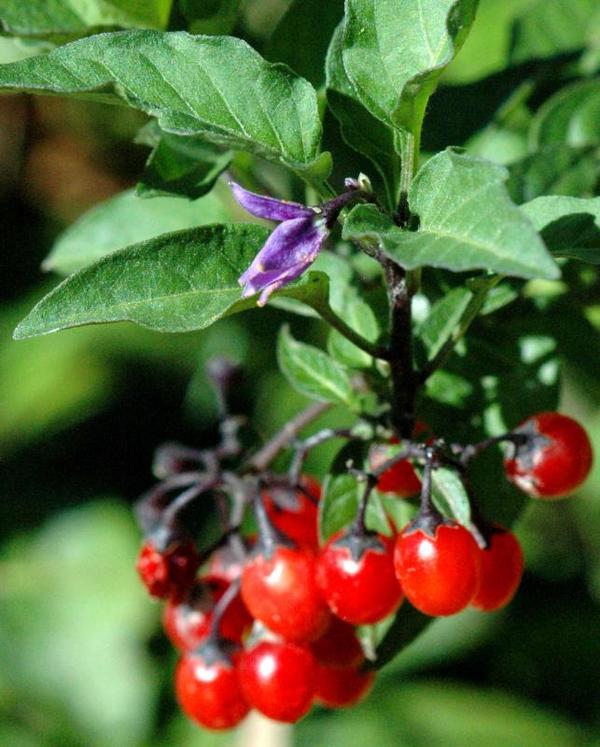
Dulcamara
Solanum dulcamara · Nightshade, woody nightshade, bitter nightshade, felonwort · Plant · Solanaceae
Dulcamara is typically given to people who are sensitive to cold and damp, with symptoms caused by rapid temperature changes or cold, wet weather.
In the symptom picture for Dulcamara, these physical factors outweigh psychological traits, but some confusion, irritability, impatience, and restlessness may be evident, possibly with a domineering attitude, notably toward family members.
Susceptibility to respiratory infections causing thick, yellow mucus is typical. Hay fever and other allergic reactions are also common, as are head and joint pain, eczema, and diarrhea.
Key symptoms
- conditions that are affected by weather changes from hot to cold
- domineering nature
- sensitivity to cold and damp
- asthma
- urticaria in humid conditions
Worse (aggravation)
- Worse from cold, damp weather
- Worse from exposure to wet and cold rain
- Worse from cold nights after hot days
- Worse from sitting on cold, damp ground
- Worse in open air
- Worse from every cold change of weather
Better (amelioration)
- Better from moving about
- Better from warmth
- Headache relieved by conversation

Bitter-sweet
Hot days and cold nights towards the close of summer are especially favorable to the action of Dulcamara, and is one of the remedies that correspond in their symptoms to the conditions found as effects of damp weather, colds after exposure to wet, especially diarrhœa. It has a specific relation also to the skin, glands, and digestive organs, mucous membranes secreting more profusely while the skin is inactive. The rheumatic troubles induced by damp cold are aggravated by every cold change and somewhat relieved by moving about. Results from sitting on cold, damp ground. Icy coldness. One-sided spasms with speechlessness. Paralysis of single parts. Congestive headache, with neuralgia and dry nose. Patients living or working in damp, cold basements (Nat sulph). Eruptions on hands, arms or face around the menstrual period.
Head
Mental confusion. Occipital pain ascending from nape of neck. Headache relieved by conversation. Rejects things asked for. Back part of head chilly, heavy, aching, during cold weather. Ringworm of scalp. Scaldhead, thick brown crusts, bleeding when scratched. Buzzing in head.
Nose
Dry coryza. Complete stoppage of nose. Stuffs up when there is a cold rain. Thick, yellow mucus, bloody crusts. Profuse coryza. Wants nose kept warm, least cold air stops the nose. Coryza of the new born.
Eyes
Every time he takes cold it settles in eyes. Thick, yellow discharge; granular lids. Hay-fever; profuse, watery discharge, worse in open air.
Ears
Earache, buzzing, stitches, and swelling of parotids. Middle-ear catarrh (Merc dulc; Kal mur).
Face
Tearing in cheek extending to ear, orbit, and jaw, preceded by coldness of parts, and attended by canine hunger. Humid eruption on cheeks and face generally.
Mouth
Saliva tenacious, soapy. Dry, rough tongue, rough scraping in throat, after taking cold in damp weather. Cold-sores on lips. Facial neuralgia; worse, slightest exposure to cold.
Stomach
Vomiting of white, tenacious mucus. Aversion to food. Burning thirst for cold drinks. Heartburn. Nausea accompanies the desire for stool. Chilliness during vomiting.
Abdomen
Colic from cold. Acts prominently on umbilical region. Cutting pain about navel. Swelling of inguinal glands (Merc).
Stool
Green, watery, slimy, bloody, mucus, especially in summer, when the weather suddenly becomes cold; from damp, cold weather and repelled eruptions.
Urine
Must urinate when getting chilled. Strangury, painful micturition. Catarrh of bladder from taking cold. Urine has thick, mucous, purulent sediment. Ischuria from wading with bare feet in cold water.
Female
Suppression of menses from cold or dampness. Before appearance of menses, a rash appears on skin, or sexual excitement. Dysmenorrhœa, with blotches all over; mammæ engorged and sore, delicate, sensitive to cold.
Respiratory
Cough worse cold, wet weather, with free expectoration, tickling in larynx. Cough, hoarse, spasmodic. Whooping-cough, with excessive secretion of mucus. Winter coughs, dry, teasing. Asthma with dyspnœa. Loose, rattling cough; worse wet weather. Must cough a long time to expel phlegm. Cough after physical exertion.
Back
Stiff neck. Pain in small of back, as after long stooping. Stiffness and lameness across neck and shoulders, after getting cold and wet.
Extremities
Paralysis; paralyzed limbs, feet icy cold. Warts on hands. Perspiration on palms of hands. Pain in shin-bones. Rheumatism alternates with diarrhœa. Rheumatic symptoms after acute skin eruptions.
Skin
Adenitis. Pruritus, always worse in cold, wet weather. Herpes zoster, pemphigus. Swelling and indurated glands from cold. Vesicular eruptions. Sensitive bleeding ulcers. Little boils. Red spots, urticaria, brought on by exposure, or sour stomach. Humid eruptions on face, genitals, hands, etc. Warts, large, smooth, on face and palmar surface of hands. Anasarca. Thick, brown-yellow crusts, bleeding when scratched.
Fever
Dry burning heat all over. Chilliness towards evening, mostly in back. Icy coldness, with pains. Dry heat and burning of skin. Chilliness with thirst.
Modalities
Worse, at night; from cold in general, damp, rainy weather. Better, from moving about, external warmth.
Relationship
Antidotes: Camph; Cupr.
Complementary: Baryta carb.
Incompatible: Bellad; Laches.
Compare: Pimpinello--(Bibernell).--Respiratory mucous membrane sensitive to draughts, pain and coldness in occiput and nape. Whole body weak; heavy head and drowsiness; lumbago and stiff neck; pain from nape to shoulder; chilliness. Rhus; Cimicif; Calc; Puls; Bry; Nat sulph.
Dose
Second to thirtieth potency.

This medicine seems especially to affect the mucous membranes. It appears to have a tendency to establish or ultimate discharges, both acute and chronic.
Modalities
The Dulcamara patient is disturbed by every change in the weather, from warm to cold, from dry to moist, and from suddenly cooling the body while perspiring. He is ameliorated in dry, even weather; cold and damp aggravate all the conditions. He is worse evening and night and during rest.
Diarrhea
Dulcamara produces catarrh of the stomach, intestines, nose, eyes, cars, and inflammatory conditions of the skin with eruptions. If you go through any of these in detail, you will be astonished to find how disturbed is the constitutional state of this patient by weather changes.

Solanum dulcamara. Woody Nightshade. Bitter-sweet. N. O. Solanaceæ. (Not to be confounded with "Deadly Nightshade," Belladonna, nor with "Climbing Bitter-sweet," Celastrus.) Tincture prepared from fresh green stems and leaves, gathered just before flowering.
Clinical
Adenitis. Angina faucium. Aphonia. Bladder, affections of. Blepharophthalmia. Catarrh. Cholera. Crusta lactea. Diarrhœa. Dropsy. Dysentery. Emaciation. Exostoses. Hæmorrhage. Hæmorrhoids. Hay-fever. Headache. Herpes. Influenza. Irritation. Lichen. Lumbago. Measles. Meningitis. Myalgia. Myelitis. Nettle-rash. Neuralgia. Ophthalmia. Paralyses. Pemphigus. Rheumatism. Scarlatina. Scrofula. Stammering. Stiff-neck. Thirst. Tibiæ, pains in. Tongue, affections of. Tonsillitis. Tumours. Typhoid. Urine, difficulty in passing; incontinence of. Warts. Whooping-cough.

Bitter-sweet. (Solanaceae.)
Adapted to persons of phlegmatic scrofulous constitutions; restless, irritable. Catarrhal rheumatism or skin affections, brought on or aggravated by exposure to cold, damp, rainy weather, or sudden changes in hot weather (Bry.). Increased secretions of mucous membranes; perspiration being suppressed from cold. Patients living or working in a damp, cold basement, or a milk dairy (Aran., Ars., Nat. s.). Mental confusion; cannot find the right word for anything. Skin is delicate, sensitive to cold, liable to eruptions, especially urticaria; every time patient takes cold or is long exposed to cold. Anasarca; after ague, rheumatism, scarlet fever. Dropsy: after suppressed sweat; suppressed eruptions; exposure to cold. Diarrhoea: from taking cold in damp places, or during damp, foggy weather; change from warm to cold weather (Bry.). Catarrhal ischuria in grown-up children, with milky urine; from wading with bare feet in cold water; involuntary. Rash before the menses (Con. - during profuse menses, …

Mind
Inclination to scold without being angry.
Mind
Inarticulate speaking from swollen tongue, but talks incessantly.
Mind
Cannot find the right word for a thing.
Head
On awaking in the morning, giddy and dizzy, dark before the eyes, trembling and weakness.
General Face
Face ache and asthma, after disappearance of tetters in the face.
Nose
Nose-bleed; blood bright red and hot, with pressure above the nose.
Nose
Coryza brought on from a change of hot to cold weather; of summer to autumn, < in open air and at night.
Mouth and Throat
Tongue and jaws become lame if cold air or water chills him.
Abdomen
Colic as from taking cold, and threatened diarrhoea.
-
Always as a forerunner of the menses, a rash appears on the skin.
-
Nettle-rash with much itching, after scratching it burns, increases in warmth, better in cold.
-
If cold air or water chills him, his tongue gets lame, even the jaws.
-
Dropsical affections after suppression of sweat by damp, cold air.
-
From taking cold, the neck stiff, back painful, loins lame.
-
After disappearance of tetters on face, faceache, violent asthma.
-
All symptoms aggravated by a change to cool wet weather.

Phatak's chapter on Dulcamara is available in the app.
Read Phatak in the appClassical texts are in the public domain. Educational reference only — not medical advice.
