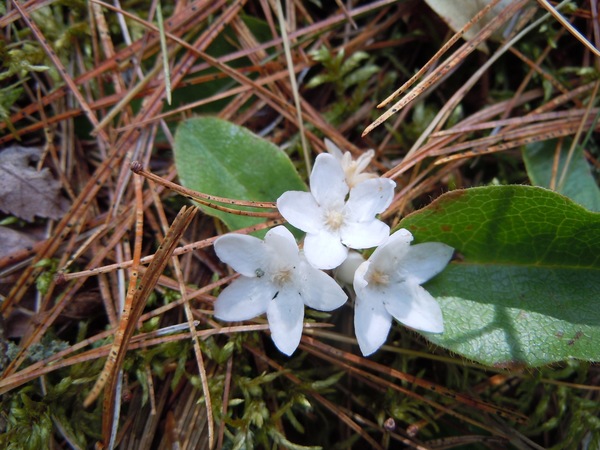
Epigea repens
Epigaea repens · Plant · Ericaceae
Epigea Repens suits individuals with chronic urinary conditions including cystitis, gravel, and renal calculi. The characteristic brown sandy deposit in urine with burning at the bladder neck and post-void tenesmus guides prescribing. It has successfully cleared bloody muco-purulent sediment with intense dysuria.
Key symptoms
- Chronic cystitis with dysuria and tenesmus after micturition
- Muco-pus and uric acid deposit in urine
- Fine sand in urine of a brown color
- Burning in neck of bladder whilst urinating
- Gravel and renal calculi
- Pyelitis and incontinence of urine
- Croaking noise and rumbling in bowels

Trailing Arbutus
Chronic cystitis, with dysuria; tenesmus after micturition; muco-pus and uric-acid deposit, gravel, renal calculi. Fine sand in urine of a brown color. Burning in neck of bladder whilst urinating and tenesmus afterward. Pyelitis, incontinence of urine. Croaking noise and rumbling in bowels.
Relationship
Compare: Uva, Chimaph, Lyc; Pareira. Epigea contains Arbutin, also Formic acid.
Dose
Tincture in 5-drop doses every three hours.

Trailing Arbutus. N. O. Ericaceæ. Tincture of fresh leaves.
Clinical
Calculi, urinary. Dysuria. Gravel. Strangury.
Characteristics
Hale mentions Epigea as having been a popular remedy in renal calculi throughout the United States ever since the settlement. "It has been successful in removing dysuria and strangury as well as urinary tenesmus." Hale once gave to a patient who had a bloody muco-purulent sediment in the urine with intense dysuria, ten drops of the tincture six times a day. A copious deposit of fine brown sand was observed and all symptoms were relieved.
Relations
Botan.: Arbutus, Uva ursi. Compare also: Mitchella, Chimaphila, Cannabis, Calc. ren., Urtica urens, Uric acid.
Classical texts are in the public domain. Educational reference only — not medical advice.
