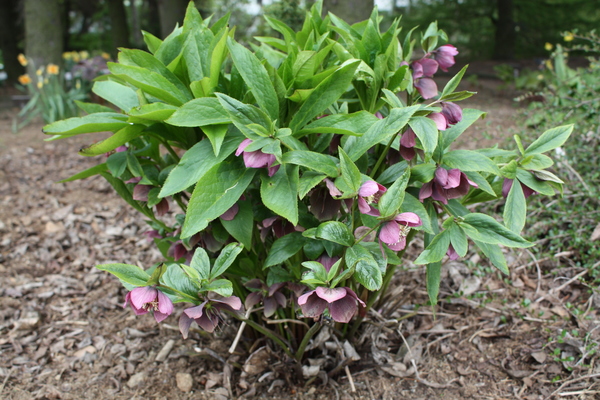
Helleborus orientalis
Plant · Ranunculaceae
Helleborus orientalis acts primarily on the gastrointestinal tract, producing symptoms similar to other Hellebores. The remedy is characterised by accumulation of saliva in the mouth with a clean tongue, along with exhaustion, burning in the stomach, and diarrhoea. Symptoms were ameliorated by coffee.
Key symptoms
- Accumulation of water in mouth with clean tongue
- Bad taste with clean tongue
- Prostration, exhaustion, and disinclination to work
- Burning in stomach extending to lower oesophagus
- Diarrhoea with frequent liquid stools in the morning
- Loss of appetite with eructations and hiccough
- Frequent rumbling along bowels on waking
- Urine more profuse and paler than usual
Worse (aggravation)
- Morning on waking (rumbling and diarrhoea)
Better (amelioration)
- Coffee

Helleborus orientalis, Lam. N. O. Ranunculaceæ. Tincture of root.
Clinical
Diarrhœa. Indigestion. Salivation.
Characteristics
This was proved by V. Schroff on Lederer, and produced symptoms like those of the other Hellebores. These are peculiar: Accumulation of water in the mouth with clean tongue. Bad taste, with clean tongue. Prostration, exhaustion, and disinclination to work; burning in stomach; diarrhœa. The symptoms were > by coffee.
2. Head
Heaviness; fulness; headache.
8. Mouth
Accumulation of water in mouth; with clean tongue.─Bad taste with clean tongue.
11. Stomach
Loss of appetite.─Eructations.─Hiccough.─Nausea.─Burning, extending from stomach to lower portion of œsophagus.─Epigastric region: Feeling of fulness with inclination to vomit; slight burning, afterwards extending to intestines, followed by pressure in stomach.
Classical texts are in the public domain. Educational reference only — not medical advice.
