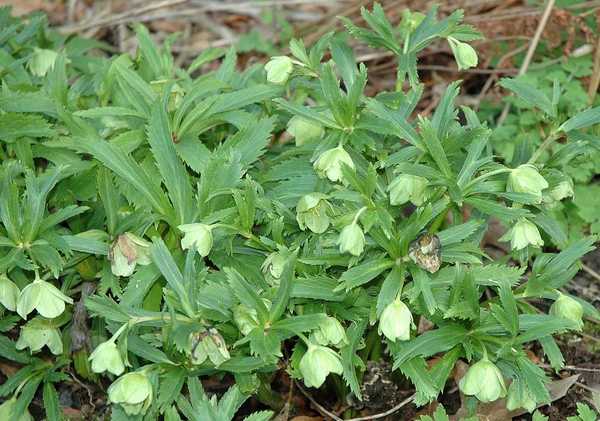
Helleborus viridis
Plant · Ranunculaceae
Helleborus viridis is a narcotico-acrid poison of the Ranunculaceae family acting primarily on the nervous system, mucous membranes, and gastrointestinal tract. Cooper used it clinically to cure leg ulcers and epilepsy. The prickling sensation on the tongue is relieved by frequent rinsing with water, and the burning in the throat is notably not relieved by drinking water.
Key symptoms
- Ringing and roaring in the ears with feeling of stoppage
- Violent itching of nose with frequent sneezing
- Intensely bitter and rancid taste causing nausea and inclination to vomit
- Burning in mouth followed by dryness
- Profuse secretion of saliva then dryness of mouth
- Diarrhoea of liquid stools
- Condition of sopor (stupor)
- Head sweats before epileptic fit
Worse (aggravation)
- Burning in throat not ameliorated by drinking water
Better (amelioration)
- Frequent rinsing of mouth with water (prickling on tongue)

Green Hellebore. N. O. Ranunculaceæ. Tincture of root; of young shoots.
Clinical
Colic. Diarrhœa. Epilepsy. Sore throat. Ulcers.
Characteristics
This was also proved by Schroff. It produced roaring in the ears; itching in the nose; and prickling of the tongue; diarrhœa of liquid stools; a condition of sopor. Cooper has cured with it ulcers of the leg, near the ankle, after the failure of Hell. n. Also a case of epilepsy in a child, the concomitant symptoms being: "Head sweats before the fit; diarrhœa for four days sleepy."
4. Ears
Ringing and roaring in the ears; with feeling of stoppage in both ears.
5. Nose
Violent itching of nose with frequent violent sneezing (from application of extract to mucous membrane of nose).
Classical texts are in the public domain. Educational reference only — not medical advice.
