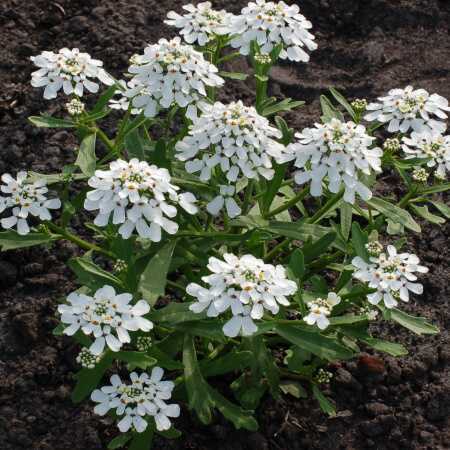
Iberis amara
Plant · Brassicaceae
Iberis amara acts primarily on the heart and cardiovascular system, controlling vascular excitement in cardiac hypertrophy and debility. The remedy is characterised by violent palpitation worsened by the slightest motion, turning to the left side, or being in a warm room. It is particularly useful in cardiac debility following influenza and in states of nervous excitement with cardiac involvement.
Key symptoms
- Palpitation with vertigo and choking in throat
- Stitching pain in cardiac region on turning to left side at each systole
- Pulse full, irregular, and intermittent
- Violent palpitation from slightest exertion, laughing, or coughing
- Wakes with palpitation about 2 am
- Vertigo as if occiput were turning around; eyes feel forced outwards
- Numbness and tingling in left hand and arm
- Tachycardia; cardiac dyspnoea; dropsy with enlarged heart
Worse (aggravation)
- Lying down
- Lying on left side
- Motion and exertion
- Warm room
- Laughing or coughing

Bitter Candytuft (IBERIS)
State of nervous excitement. Has marked action upon the heart. Possesses great efficacy in cardiac diseases. Control vascular excitement in hypertrophy with thickening of the heart's walls. Cardiac debility after influenza. Liver region full and painful. White stools.
Mind
Sad and sighing; fearful and trembling. Irritable.
Head
Vertigo and pains around heart. Constant hawking of thick, stringy mucus until after a meal. Hot, flushed face. Vertigo, as if occiput were turning around; eyes feel forced outwards.
Heart
Conscious of heart's action. On turning on left side, stitching pain as of needles through ventricles felt at each systole. Palpitation, with vertigo and choking in throat. Stitching pains in cardiac region. Pulse full, irregular, intermittent. Worse, least motion and in warm room. Sensation of weight and pressure, with occasional sharp, stinging pains. Dropsy, with enlarged heart. Violent palpitation induced by slightest exertion, or by laughing, or coughing. Darting pains through heart. Cardiac dyspnœa. Dilation of heart. Wakes with palpitation about 2 am. Throat and trachea fills up with mucus. Cough causes redness of face. Tachycardia.
Extremities
Numbness and tingling in left hand and arm. Whole body sore, lame and trembling.
Modalities
Worse, lying down; on left side; motion, exertion; warm room.
Relationship
Compare: Cact; Dig; Amyl; Bell.
Dose
Tincture and first potency.

Iberis amara. Lepidium iberis. Bitter Candytuft. N. O. Cruciferæ. Tincture of seeds.
Clinical
Asthma. Bronchitis. Dropsy. Heart, affections of; conscious action of; influenza heart.
Characteristics
Iberis is one of the many remedies introduced into homœopathy by Hale. The genus was named by Dioscorides from Iberia (Spain), its supposed original habitat. Old-school authorities had mentioned Iberis as useful in the treatment of hypertrophy of the heart. This led Hale to have the remedy proved. Sylvester (old school) had observed that Iber. controlled "the violence and sharp action of the heart and softened the pulse; hence its great service in hypertrophy." Hale's provers confirmed this observation, the pulse being softened even during palpitations. Hale considers that the primary depressing action is transient, the secondary, exciting action more persistent. The cardiac symptoms of the drug are very pronounced and well marked, consisting of pains dull or stitching, with palpitation and …

Phatak's chapter on Iberis amara is available in the app.
Read Phatak in the appClassical texts are in the public domain. Educational reference only — not medical advice.
