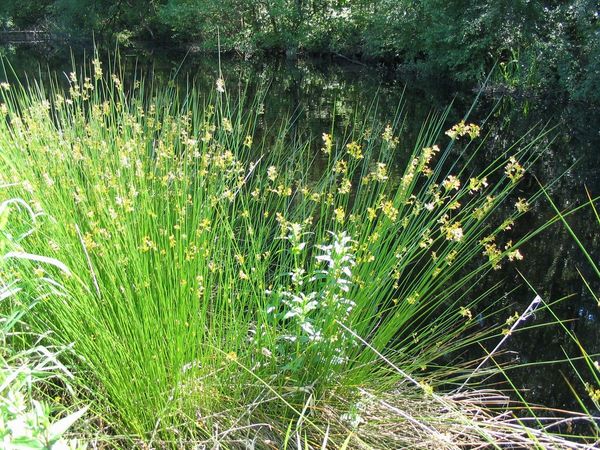
Juncus effusus
Plant · Juncaceae
Juncus effusus acts primarily on the urinary organs as a diuretic, and has been used in dropsical, calculous, and renal diseases. It produces bubbling sensations and rheumatic pains characteristically worse by flexing the affected parts and at rest. The remedy suits subjects with hemorrhoidal tendencies complicated by asthmatic or urinary complaints.
Key symptoms
- Urinary affections: dysuria, strangury, ischuria
- Bubbling sensations in various parts of the body
- Asthmatic symptoms in hemorrhoidal subjects
- Abdominal flatulence with rumbling, relieved by passing flatus
- Pressive and sticking pains in chest
- Rheumatic pains worse by rest, better by stretching
- Pains worse on left side, at night and in morning
Worse (aggravation)
- Rest
- Flexing parts
- Bending sideways
- Night
- Left side
Better (amelioration)
- Stretching out limbs
- Passing flatus

Common Rush
A diuretic. Urinary affections. Dysuria, strangury, and ischuria. Asthmatic symptoms in hæmorrhoidal subjects. Bubbling sensations. Abdominal flatulence. Arthritis and Lithiasis.
Dose
Tincture, and first potency.

Juncus effusus. Soft Rush. N. O. Juncaceæ. Tincture (of root probably).
Clinical
Asthma. Backache. Calculus. Catarrh. Dropsy. Flatulence. Headache. Kidney, diseases of. Rheumatism. Scars, affections of.
Characteristics
Juncus was proved by Dr. Wahle, and a number of symptoms were produced. The most notable were bubbling sensations in various parts; and a number of pains pressive and sticking were noted in the chest. Pulling in cervical vertebræ; in neck muscles. There was much rumbling of flatus in abdomen, and marked > to abdominal symptoms when flatus was emitted. According to Jahr, quoting Noack and Trinks, Junc. is diuretic, and has been used in dropsical, calculous, and renal diseases. Hartmann used J. conglomeratus with success in dysury, strangury, and ischury. In Livonia a decoction of J. pilosus is used for stone and gravel. The exact preparation used in the proving was not recorded. Fresh plant tinctures should be used in any further experiments. The pains were < on l. side; appeared or were < …
Classical texts are in the public domain. Educational reference only — not medical advice.
