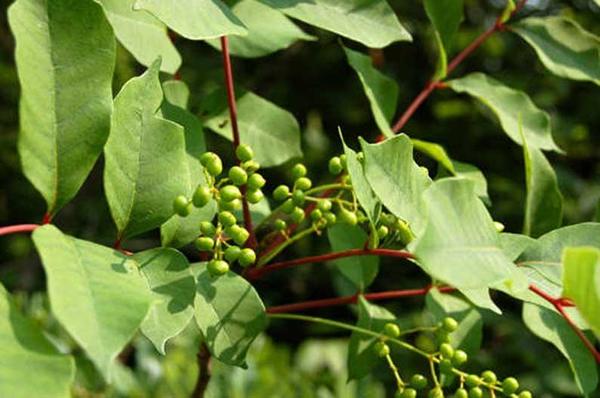
Rhus venenata
Toxicodendron vernix · Poison sumac, poison elder. · Plant · Anacardiaceae
Gloomy, forgetful people are most likely to benefit from Rhus ven., particularly if they feel unable to connect ideas together and have no will for life.
The physical symptoms associated with this remedy are similar to those treated by Rhus tox., although the focus is more heavily on skin conditions. The classic symptom picture for Rhus ven. includes flaking, itching skin, possibly with patches of thickening or hardening, and a tendency for the skin to crack. All symptoms are markedly worse in the morning.
Key symptoms
- The skin symptoms of this species of Rhus are most severe.
- Great melancholy; no desire to live, gloomy.
- Heavy, frontal headache; worse, walking or stooping.
- Eyes nearly closed with great swelling.
- Profuse, watery, white stools in morning, 4 am, with colicky pains; expelled with force.
- Pain in hypogastrium before every stool.
- Paralytic drawing in right arm, especially wrist, and extending to fingers.
- Itching; relieved by hot water.
Worse (aggravation)
Better (amelioration)

Poison-elder
The skin symptoms of this species of Rhus are most severe.
Mind
Great melancholy; no desire to live, gloomy.
Head
Heavy, frontal headache; worse, walking or stooping. Eyes nearly closed with great swelling. Vesicular inflammation of ears. Nose red and shiny. Face swollen.
Tongue
Red at tip. Fissured in middle. Vesicles on under side.
Abdomen
Profuse, watery, white stools in morning, 4 am, with colicky pains; expelled with force. Pain in hypogastrium before every stool.
Extremities
Paralytic drawing in right arm, especially wrist, and extending to fingers.
Skin
Itching; relieved by hot water. Vesicles. Erysipelas; skin dark red. Erythema nodosum, with nightly itching and pains in long bones.
Relationship
Antidote: Clematis. The California Poison-oak (Rhus diversiloba) is identical with it. It antidotes Radium and follows it well. Compare: Anacard.
Dose
Sixth to thirtieth potency.

Rhus venenata. Poison Elder. Poison Sumach. Swamp Sumach.─It is frequently named "R. Vernix," and it is given under this name in Hempel's Jahr., but the name belongs properly to the allied Varnish-tree of Japan. (North America, in swampy ground.) N. O. Anacardiaceæ. Tincture of fresh leaves and stem.
Clinical
Boils. Chilblains. Diarrhœa. Dyspepsia. Dysphagia. Eczema. Eruptions. Erysipelas. Erythema nodosum. Glands, cervical, ulceration of. Hæmorrhoids. Herpes. Hydroa. Impetigo. Irritation. Lips, swollen; sore. Lumbago. Measles. Menorrhagia. Ophthalmia. Paraplegia. Prurigo. Purpura. Scabies. Stiff neck. Tongue, cracked. Urticaria.
Classical texts are in the public domain. Educational reference only — not medical advice.
