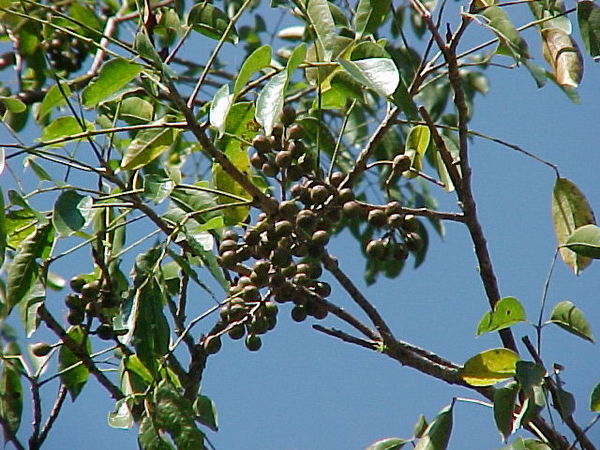
Simaruba
Simarouba amara · Plant · Simaroubaceae
Simaruba suits patients with chronic bowel looseness and dysentery, particularly of tropical origin. Its intensely bitter properties make it useful as an anthelmintic and for conditions requiring a bitter tonic action on the gastrointestinal tract. The bark decoction has been used on the Zambezi for dysentery.
Key symptoms
- Chronic tendency to looseness of the bowels
- Stools like yellow ochre
- Dysentery and diarrhea
- Worms; used as anthelmintic

Simaruba amara. Mountain damson. N. O. Simarubaceæ. Tincture of the dried root-bark.
Clinical
Diarrhœa. Dysentery. Snake-bite. Worms.
Characteristics
Simaruba is a native of the West Indies and tropical America. "Simaruba bark" is used as a bitter tonic and as a local remedy for dysentery and diarrhœa. The part used is the "bark," which is really the rind of the root, of which, domestically, a decoction is made. "In large doses," says Treas. of Botany, "it is said to act as an emetic, purgative and diaphoretic." S. versicolor, a Brazilian species, has similar properties. The fruits and bark are used as anthelmintics; an infusion of the latter is employed in cases of snake-bite. The plant is so bitter that insects will not attack it, on which account the powdered root has been used to kill vermin. S. glauca, a native of Cuba, furnishes a glutinous juice which is employed in certain cases of skin-disease." This very well sums up the place and properties of Simaruba. And it is well to remember that …
Classical texts are in the public domain. Educational reference only — not medical advice.
